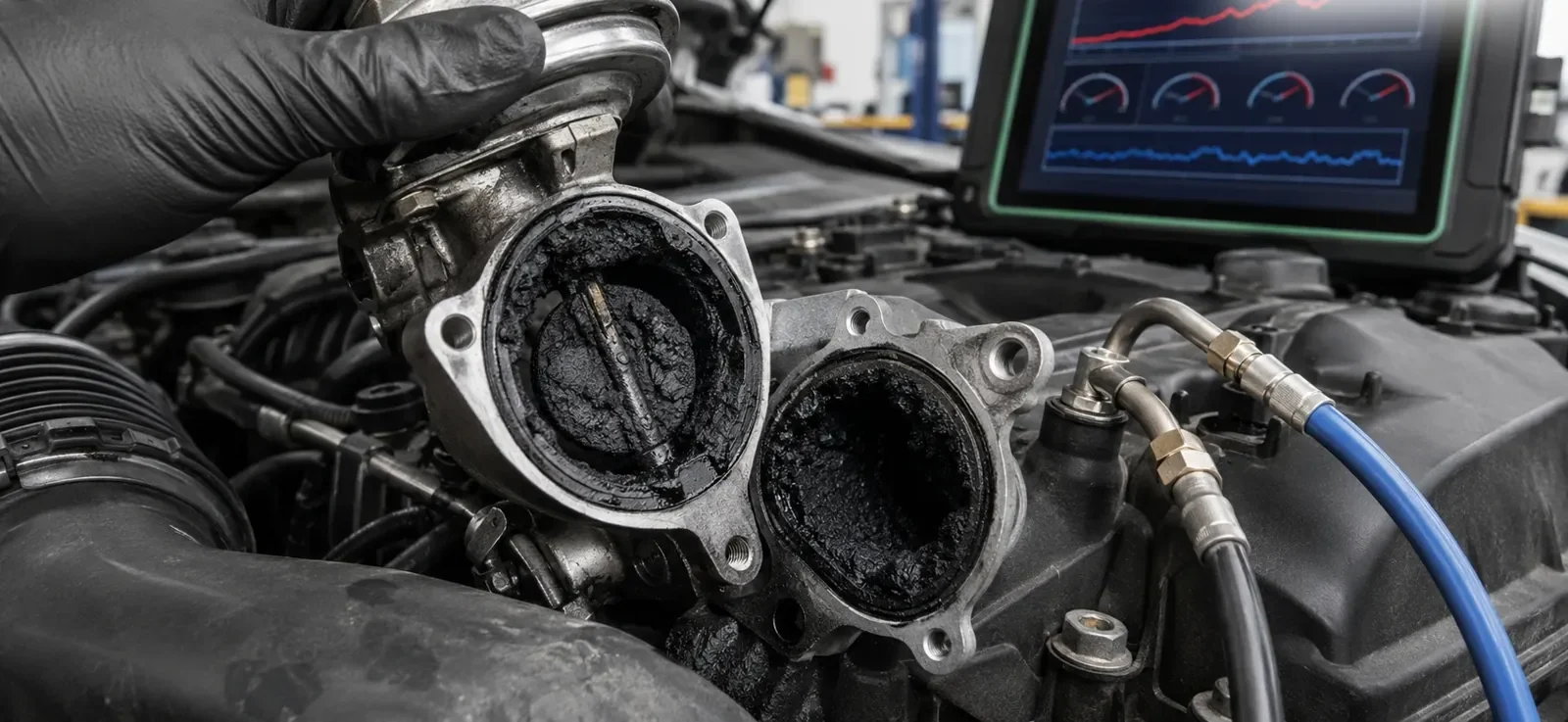
Short answer: "Exhaust filter full" means the diesel particulate filter has collected more soot than the car could burn off during normal driving. With an amber warning, Land Rover advises driving above 37 mph for about 20 minutes so the filter can clean itself. A red warning means the filter is full and performance is likely to be reduced, so the car needs a forced regeneration or repair rather than more driving. Ignoring it can lead to limp mode, a damaged filter and, on some engines, fuel diluting the oil.
Every diesel Land Rover, Range Rover and Jaguar sold in recent years has a diesel particulate filter, which the cars call the "exhaust filter". Land Rover UK says it captures 99% of particulates from the exhaust. That filter has to be emptied regularly by burning the soot off, and when the car cannot manage that on its own, the dashboard tells you. The message is easy to ignore while the car still drives normally. That is a mistake.
What does "exhaust filter full" mean on a Range Rover?
The filter is full of soot, and the automatic cleaning process, called regeneration, has not been able to empty it. The Land Rover handbook explains that regeneration normally happens every 300 to 900 km (about 190 to 560 miles), depending on driving conditions. It needs the engine at normal operating temperature and works best at a steady 40 to 70 mph for 10 to 20 minutes. It can happen at around 30 mph, but more slowly. Frequent short journeys, slow traffic and cold weather can all stop it from starting or finishing.
Amber or red: what is the difference?
| Warning | What Land Rover says it means | What to do |
|---|---|---|
| Amber exhaust filter icon or "nearly full" message | Cleaning is needed and has not happened automatically | Drive above 37 mph (Land Rover UK) or 40 mph (handbook) for about 20 minutes, with the engine warm |
| Red icon or "exhaust filter full" message | The filter is full, and performance is likely to be reduced | Do not try to burn it off on the road. Contact a retailer, Land Rover Assistance or a specialist for diagnosis |
| Green icon | Regeneration has finished | Nothing, though if the warnings keep coming back, find out why |
The handbook adds a warning: if the amber message is not dealt with, it will eventually turn red and "the filter may need to be replaced". Land Rover's own page also notes that a charge may be made if the filter failed to regenerate because of driving style.
How do I clear an amber exhaust filter warning?
- Wait until you can drive on a suitable road: a dual carriageway or motorway is ideal.
- Let the engine reach normal temperature first.
- Drive steadily above about 40 mph for 20 minutes or so. Holding a gear that keeps revs a little higher can help, but there is no need to drive hard.
- Do not switch off part-way through if you can avoid it. An interrupted regeneration is the root of the problems below.
- Check that the warning has cleared. If it comes straight back, or turns red, the filter is not the only problem.
Why does my Range Rover keep saying "exhaust filter full"?
If the warning returns every week or two, the driving pattern or a fault is preventing regeneration. Common reasons include:
- Journey pattern. School runs and short commutes never give the system the 10 to 20 minutes of steady driving it needs.
- Sensor faults. The differential pressure sensor and its pipes tell the engine how full the filter is. A split pipe or a faulty sensor can make the car think the filter is full, or stop it from trying to clean it.
- Too much soot from the engine. A sticking EGR valve, a leaking injector or a tired turbo produces more soot than the filter can handle.
- Other emissions faults. A fault logged elsewhere in the emissions system, including the AdBlue side on newer cars, can stop the engine from allowing a regeneration.
- Oil. These engines need low-ash oil to the JLR specification. The wrong oil adds ash, which regeneration cannot burn off.
Can a blocked DPF damage the engine?
Yes, indirectly, and this is the part most owners do not hear about. During regeneration, many diesels inject extra fuel late in the cycle to heat the exhaust. When a regeneration is cut short again and again, some of that fuel washes past the piston rings into the sump. The oil level rises, the oil smells of diesel, and its ability to protect the engine drops.
On the 2.0 Ingenium diesel in the Evoque, Velar, Discovery Sport and others, specialists link diluted oil to faster timing chain wear and to bearing damage. A clogged filter also raises exhaust back-pressure, which puts extra load on the turbo. So a warning light that starts as a nuisance can end as an engine repair if it is ignored for months. Our Ingenium engine guide covers the link in more detail.
Is the oil level rising on my diesel a DPF problem?
Often, yes. A rising oil level between services, a diesel smell on the dipstick, or an oil-service message long before the service is due all suggest fuel dilution from interrupted regenerations. Do not simply drain a little oil out. Have the oil and filter changed, then find out why the regenerations are failing. If the dilution has been heavy, the timing chain and bearings deserve a check too.
Clean, regenerate or replace: what does a red warning need?
- Forced regeneration: started with diagnostic equipment while the car is stationary or on a test drive. This is suitable when the soot load is high but the filter is otherwise healthy.
- Off-car cleaning: for filters too loaded to regenerate safely, or with ash build-up.
- Replacement: when the filter has cracked, melted or reached the end of its life.
- Fixing the cause: sensors, pipes, EGR, injectors or the driving pattern. Without this, the warning comes back.
Our DPF and EGR repair service covers each option. If limp mode has come with other symptoms, start with engine diagnosis.
How can I stop the exhaust filter warning coming back?
If your driving is mainly short trips, build in a longer run at a steady speed every week or two, ideally before the amber warning appears rather than after it. Keep the oil to the JLR specification and change it on time, or earlier if the level has been rising. Deal with EGR and injector faults promptly, because they create the soot in the first place. If a diesel genuinely never leaves town, it may be worth asking whether a petrol or hybrid suits your use better when the car is next replaced.
Can I just have the DPF removed?
No. GOV.UK guidance says it is an offence to use a vehicle that has been modified so it no longer meets the emissions standard it was designed to meet, and removing a DPF will almost always do that. Since February 2014, the MOT checks that a DPF is present on vehicles that had one when they were built. We repair and clean filters. We never remove or disable them.
Which Land Rover and Jaguar engines are affected?
All of the modern diesels have a DPF: the 2.2 diesel in the Evoque, Freelander 2 and early Discovery Sport, the 2.0 Ingenium diesel, the 3.0 TDV6/SDV6, the 4.4 SDV8 and the 3.0 Ingenium straight-six diesel. The warnings and the advice above apply across the range. The engines hub shows which one your car has.
Red exhaust filter warning or limp mode?
Send us the registration and a photo of the message. We will check the sensors, soot load and oil, then regenerate, clean or replace the filter and fix the reason it blocked. We offer collection and delivery within about 100 miles of the Rainham and Peterborough workshops. Engine work carries our warranty: 6 months with unlimited miles, or 12 months or 12,000 miles.
Book a DPF check or call 020 8089 1373 / WhatsApp 07936 418074.
Frequently asked questions
How long do I need to drive to clear an exhaust filter warning?
Land Rover UK advises driving above 37 mph for about 20 minutes. The handbook describes regeneration at a steady 40 to 70 mph taking 10 to 20 minutes once the engine is warm.
Can I drive with the red exhaust filter warning on?
Only to get the car checked. Land Rover says performance is likely to be reduced, and the handbook warns that the filter may need replacing. Trying to clear a red warning by driving hard can damage it.
Does "exhaust filter full" mean I need a new DPF?
Not necessarily. Many filters recover with a forced regeneration or a professional clean, once the cause has been fixed. Replacement is for filters that are cracked, melted or at the end of their life.
Why is the fan running after I switch off my Land Rover diesel?
A regeneration may have been in progress when you switched off. If it happens after most journeys, the car is struggling to complete regenerations, and the oil level is worth watching.
Is it legal to remove a DPF in the UK?
No. GOV.UK guidance says using a vehicle modified so it no longer meets its emissions standard is an offence, and the MOT checks that a DPF is fitted where one was fitted at build.
Sources we checked
- Land Rover UK, maintaining low diesel emissions (DPF, amber/red/green guidance, 37 mph for 20 minutes)
- Land Rover Discovery owner handbook, exhaust filter (300–900 km, 40–70 mph, 10–20 minutes), via lrdisc.com
- GOV.UK, diesel particulate filters guidance note
- GOV.UK, new rules for MOT to test for diesel particulate filter
- Stedmans, 2.0 Ingenium engine problems (oil dilution and DPF)
- K Motors, DPF failure on the 2.0D Ingenium
More guides
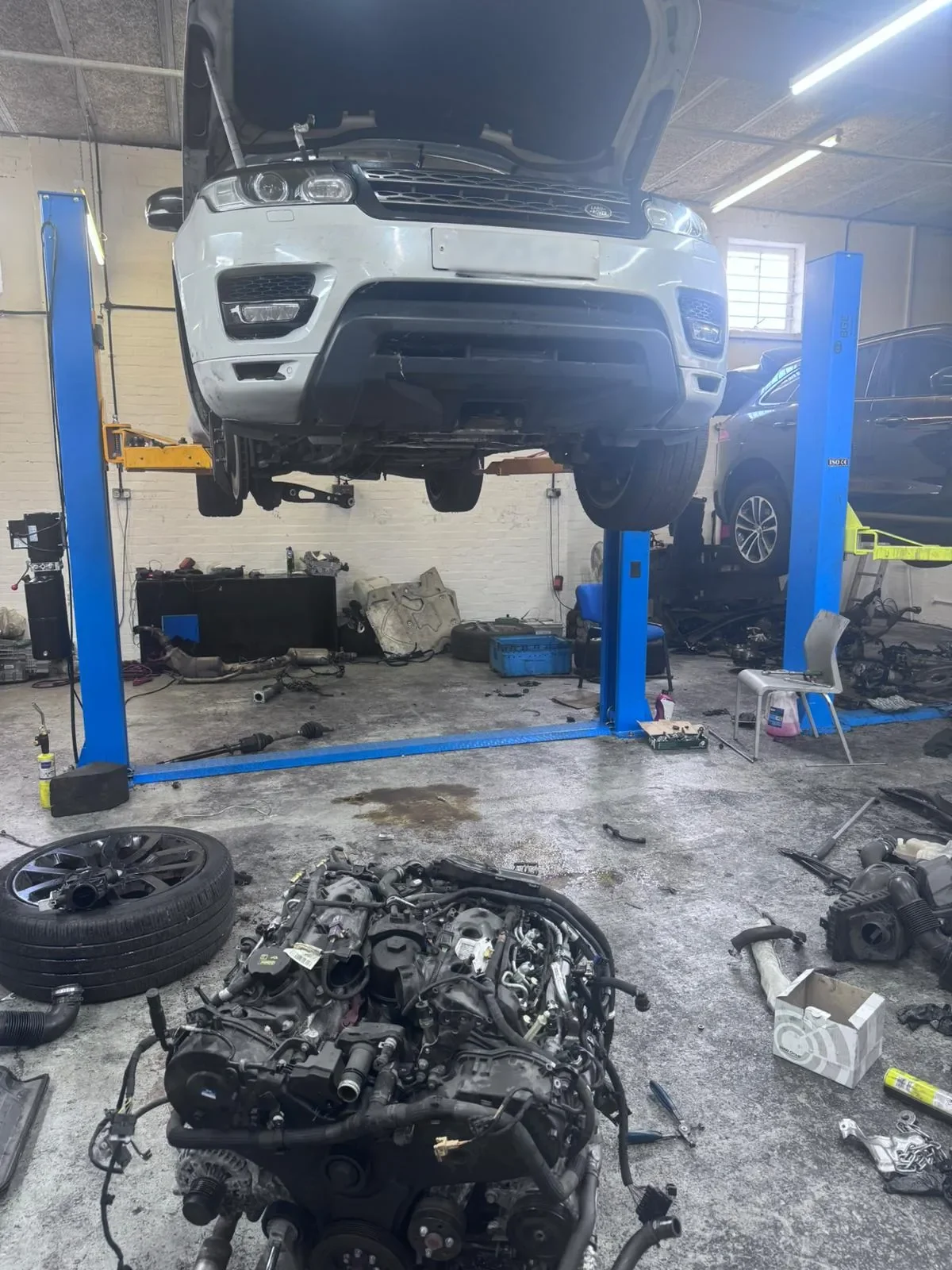 Engine Guides · 25 November 2026
Range Rover Classic and P38 Engine Rebuild: V8 and Diesel Guide
An owner guide to Range Rover Classic and P38 engines: Rover V8, 200Tdi and BMW diesel, common wear points and what a rebuild involves.
Read the guide →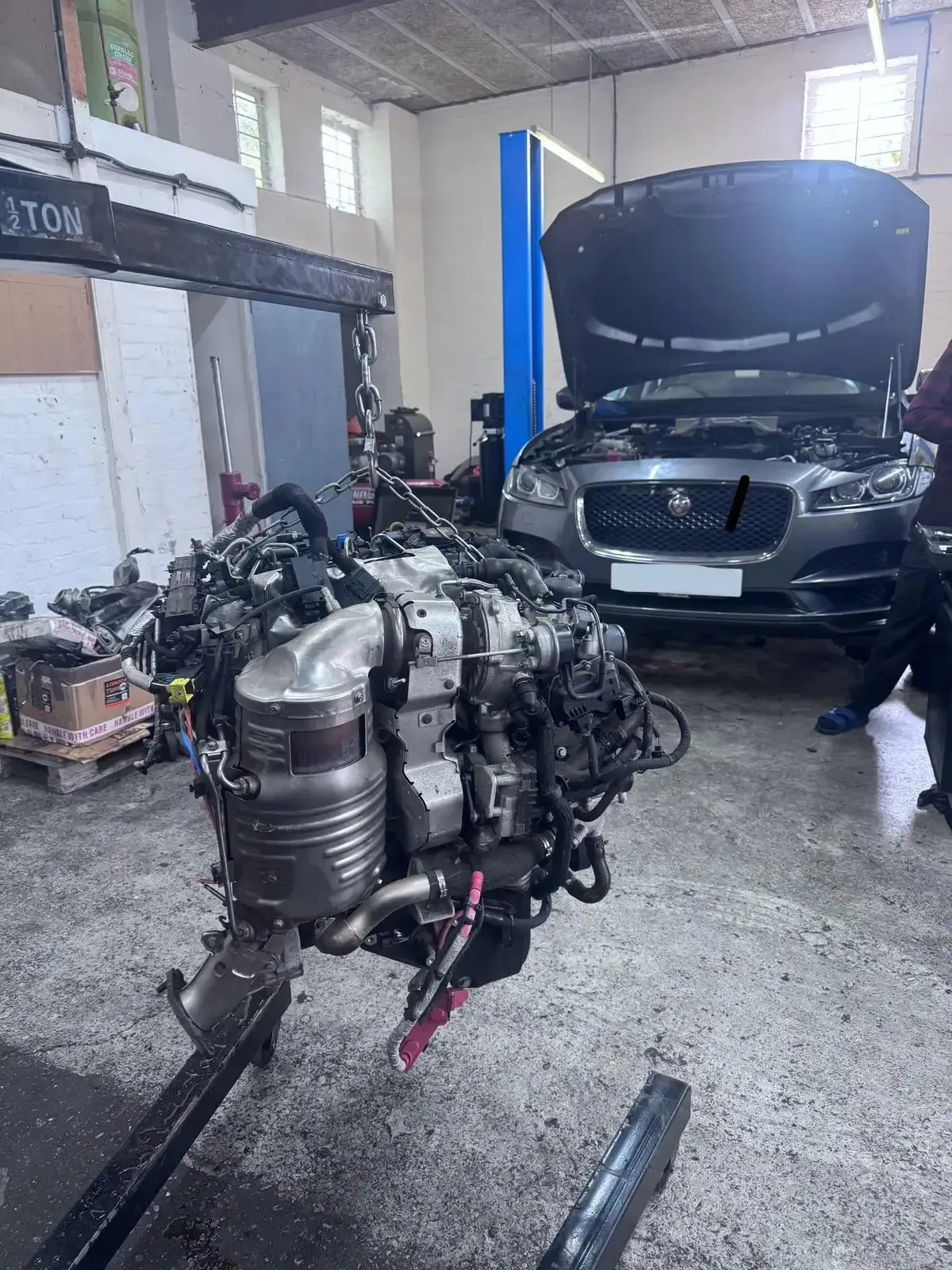 Engine Guides · 23 November 2026
Land Rover 200Tdi, Td5 and Discovery 2 Engine Rebuild Guide
An owner guide to rebuilding 200Tdi, 300Tdi, Td5 and Discovery 2 engines: common faults, what to check and what a rebuild covers.
Read the guide →Buying Guides · 22 November 2026Range Rover Engines to Avoid, and the Ones With the Best Record
A buyer-focused look at every Range Rover engine since 2013, from the TDV6 to the newest straight-sixes, with the documented weak points of each and how to check a car before you buy.
Read the guide →