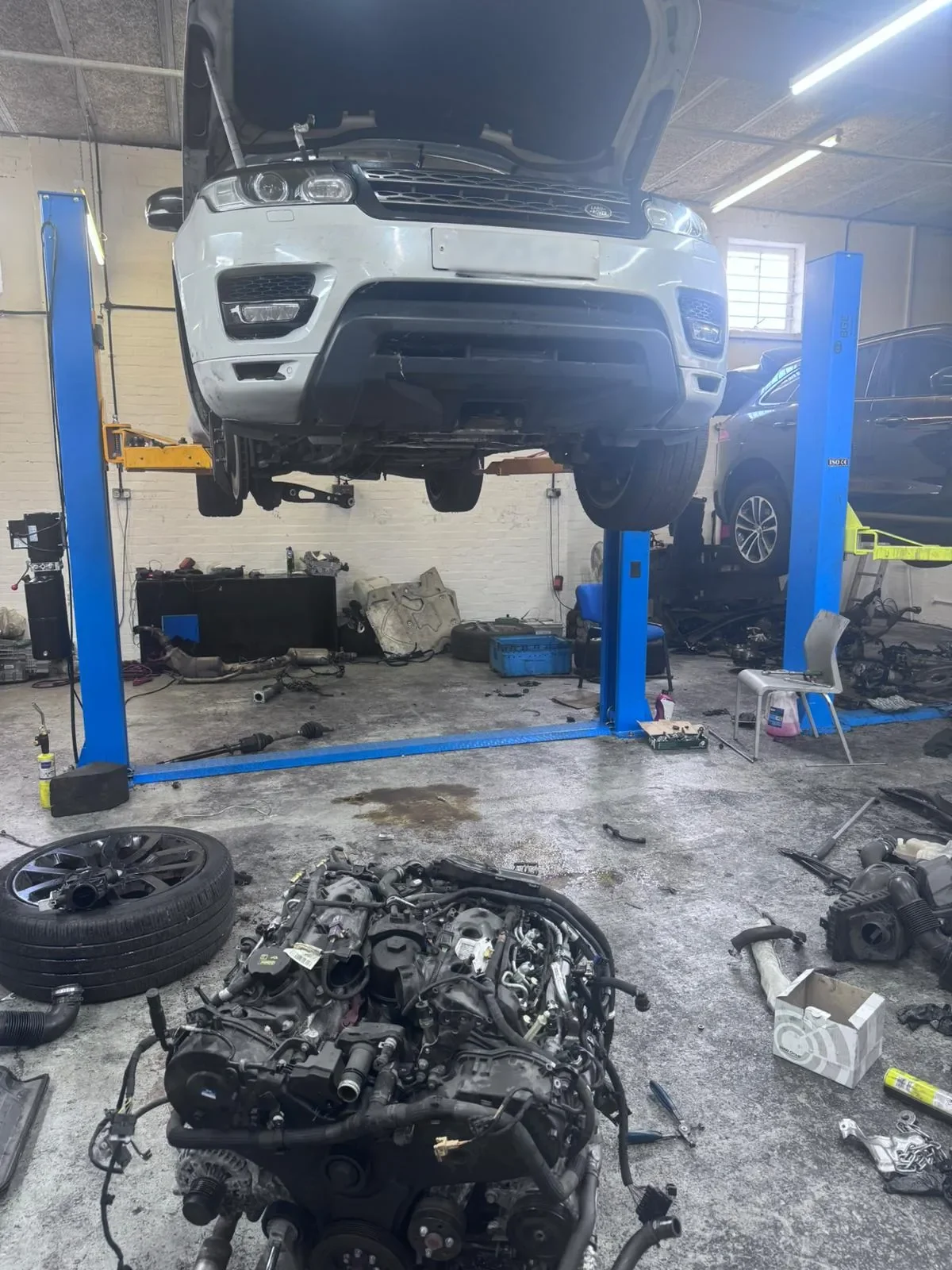
Short answer: The Range Rover engine with the most documented risk is the 3.0 TDV6/SDV6 diesel, because of crankshaft bearing failures recorded in Land Rover's own service message. Other engines have known, manageable weak points: timing chains on the 2.0 Ingenium diesel and older 5.0 V8s, and oil cooler and breather leaks on the 4.4 SDV8. PistonHeads' L405 buying guide rates the 4.4 SDV8 as a good, reliable engine. For any engine, a complete service history and a clean cold start count for more than the badge.
"Which engine should I avoid?" is the question we are asked most by people about to buy a used Range Rover, and it is a fair one. These cars share bodies and interiors across several very different engines, and some of those engines have far better records than others. There is no trustworthy published failure rate for any of them, so we will not quote one. What follows is based on Land Rover's own technical documents, respected buying guides and what each engine is known for.
Which Range Rover engines have the worst record?
3.0 TDV6 and SDV6 diesel (to about 2018)
This is the engine most often named when owners talk about Range Rover engine failure. Land Rover's Special Service Message 72578 covers crankshaft and crankshaft bearing failure on the 3.0 TDV6 in the Discovery 4, the Range Rover L405 and the Range Rover Sport L320 and L494. It gives the cause as rotation of the main bearing shells, and the symptom as a loud rumbling or knocking that gets worse under load. PistonHeads' L494 buying guide records the same issue and notes the improvements made over the earlier 2.7. The engine also uses timing belts with a time-and-mileage interval, and many used cars have no proof that the belts were changed. Our TDV6 crankshaft failure guide goes into the detail, and the 3.0 TDV6/SDV6 engine page lists every model that uses it.
That does not mean every TDV6 will fail. It means this is the engine where history and condition matter most, and where a knock or an oil pressure warning must never be ignored.
2.0 Ingenium diesel (Evoque, Velar, Sport SD4)
A smaller engine with a different documented risk: timing chain stretch at the gearbox end of the engine, made worse by oil diluted by short-trip driving. It is very fixable if it is caught at the cold-start rattle stage, and expensive if it is not. See our Ingenium engine guide.
Which engines have known but manageable weak points?
4.4 SDV8 diesel (L405 and L494, to about 2018)
PistonHeads' L405 buying guide calls the 4.4 the most desirable engine in that Range Rover, and "a good and reliable engine". It points out that the V8 does not suffer the V6's crankshaft bearing issues and has no timing belt to change. It still lists EGR valve problems and turbo breather oil leaks. Specialists also describe oil cooler leaks and timing chain wear. The chains sit at the rear of this engine, so chain work normally means taking the engine out. See our 4.4 SDV8 engine page.
5.0 V8 supercharged (petrol)
The big petrol V8 had its timing chain tensioners and guides revised under bulletin LTB00474. The newer blades have a steel insert, and the bulletin requires a full set to be fitted, never a mix of old and new. Plastic coolant pipes under the supercharger and the water pump are known leak points, and a coupler in the supercharger drive can rattle. All of these give warning signs. The 5.0 V8 supercharged page covers each one.
3.0 V6 supercharged (petrol)
A V6 derived from the 5.0 V8, which shares much of its timing and cooling design, so the same checks apply: listen for a rattle on start-up and watch the coolant level.
What about the newest Range Rover engines?
The L460 Range Rover and L461 Range Rover Sport use 3.0 Ingenium straight-sixes, plug-in hybrids and a BMW-sourced 4.4 twin-turbo V8. They are too new for a long-term record. What exists so far is recall and campaign activity, such as DVSA recall R/2024/255 for the oil filter housing on some six-cylinder Ingenium engines. The P530's V8 is a later version of BMW's N63, and early N63s in BMW cars were the subject of a well-known Customer Care Package covering timing chains, injectors and crankcase vent lines. That is a reason to keep up with oil changes and listen for timing noise, not proof that the later engine in a Range Rover shares those faults.
Range Rover engines compared
| Engine | Typical models | Documented concern | Buyer's verdict |
|---|---|---|---|
| 3.0 TDV6 / SDV6 diesel | L405, L494, Velar, Discovery 4 | Crankshaft bearing shell rotation (SSM 72578); belt intervals | Highest risk. Only with full history, belt invoices and a quiet bottom end |
| 4.4 SDV8 diesel | L405, L494 | EGR, breather and oil cooler leaks; rear chains | Strong record in buying guides. Check for leaks and chain noise |
| 2.0 Ingenium diesel | Evoque, Velar, L494 SD4 | Rear timing chain stretch, oil dilution | Fine with good history. Avoid any cold-start rattle |
| 5.0 V8 supercharged | L405, L494, SVR, Velar SVAD | Chain guides (LTB00474), coolant pipes, coupler | Good if the cooling and chain work is documented |
| 3.0 Ingenium I6 diesel and petrol | L405 and L494 (late), L460, L461, Velar | Recall R/2024/255; DPF and mild-hybrid faults | Too new to rank. Check that recalls are done |
| 4.4 twin-turbo V8 (BMW) | L460, L461 | Limited long-term data | Too new to rank. Keep to oil intervals |
So what is the most reliable Range Rover engine?
On the evidence available, the 4.4 SDV8 has the strongest reputation among the older diesels. The supercharged 5.0 V8 is generally well regarded once its chain and cooling updates are in place. The newer straight-sixes may well prove better than both, but they do not have the years behind them yet to say so. We would rather tell you that than invent a ranking.
Is a petrol or a diesel Range Rover the safer buy?
It depends more on how you drive than on the fuel. The diesels' biggest enemy is short-trip use. A particulate filter that never finishes a regeneration leads to warning lights and, on some engines, fuel in the oil. If most of your journeys are short and urban, a petrol or plug-in hybrid avoids that problem, although the supercharged petrols bring their own cooling-system checks. If you cover long motorway miles, a well-maintained diesel suits the car and the way it was designed to be used.
How do I check a used Range Rover engine before buying?
- Insist on a cold start, and listen for rattles in the first few seconds and for any knock as revs rise.
- Read the service history for intervals and oil specification, and look for invoices for timing belts on V6 diesels.
- Check the coolant and oil levels, and look for oil in the coolant expansion tank on V8 diesels.
- Run the registration through the GOV.UK recall checker.
- Have the fault memory read with JLR-capable equipment rather than a generic code reader.
If the worst has already happened, our Range Rover engines hub lists every model, from the L405 to the Range Rover Sport L494, and engine we rebuild or replace. Our engine rebuild service explains how we put a failed engine right.
Buying a Range Rover, or already have a problem?
Send us the registration. We will confirm the exact engine, tell you what to look out for and, if the engine has failed, quote for repair, rebuild or replacement. We offer collection and delivery within about 100 miles of the Rainham and Peterborough workshops, and our warranty is 6 months with unlimited miles, or 12 months or 12,000 miles.
Ask about a Range Rover engine or call 020 8089 1373 / WhatsApp 07936 418074.
Frequently asked questions
Do Range Rovers have engine problems?
Some engines have documented weak points: crankshaft bearings on the 3.0 TDV6/SDV6, timing chains on the 2.0 Ingenium diesel, and cooling parts on the supercharged V8s. Many cars never suffer them, especially with on-time servicing.
Which Range Rover Sport engine should I avoid?
In the L494 Range Rover Sport, the 3.0 TDV6 and SDV6 diesels carry the most documented risk because of the crankshaft bearing issue in SSM 72578. Buy one only with full history and a quiet engine.
Is the 4.4 SDV8 more reliable than the 3.0 SDV6?
PistonHeads' L405 buying guide says the 4.4 is not prone to the V6's crankshaft bearing issues and calls it a good and reliable engine. It still has its own leaks and rear-mounted chains to check.
How long do Range Rover engines last?
There is no fixed figure. It depends on the engine, the servicing and how the car is used. Oil changed on time to the right specification, and early action on warning signs, matter more than the engine type.
Can a failed Range Rover engine be rebuilt?
Yes, in most cases. A rebuild fixes the cause of the failure and keeps the original engine. A reconditioned or used engine is the alternative when the block or crankshaft cannot be saved.
Sources we checked
- JLR Special Service Message 72578, 3.0 TDV6 crankshaft/bearing concerns (via NHTSA)
- PistonHeads, Range Rover (L405) used buying guide
- PistonHeads, Range Rover Sport (L494) used buying guide
- JLR SSM71893 / TSB LTB00474 v2, AJ133 chain tensioner repair (via NHTSA)
- Vogue Technics, Range Rover 4.4 diesel timing chain problems
- Wikipedia, BMW N63 (Customer Care Package)
- Wikipedia, Range Rover (L460) (engine families)
- GOV.UK, check if a vehicle has been recalled (R/2024/255)
- Stedmans, 2.0 Ingenium engine problems
More guides
Engine Guides · 25 November 2026Range Rover Classic and P38 Engine Rebuild: V8 and Diesel Guide
An owner guide to Range Rover Classic and P38 engines: Rover V8, 200Tdi and BMW diesel, common wear points and what a rebuild involves.
Read the guide →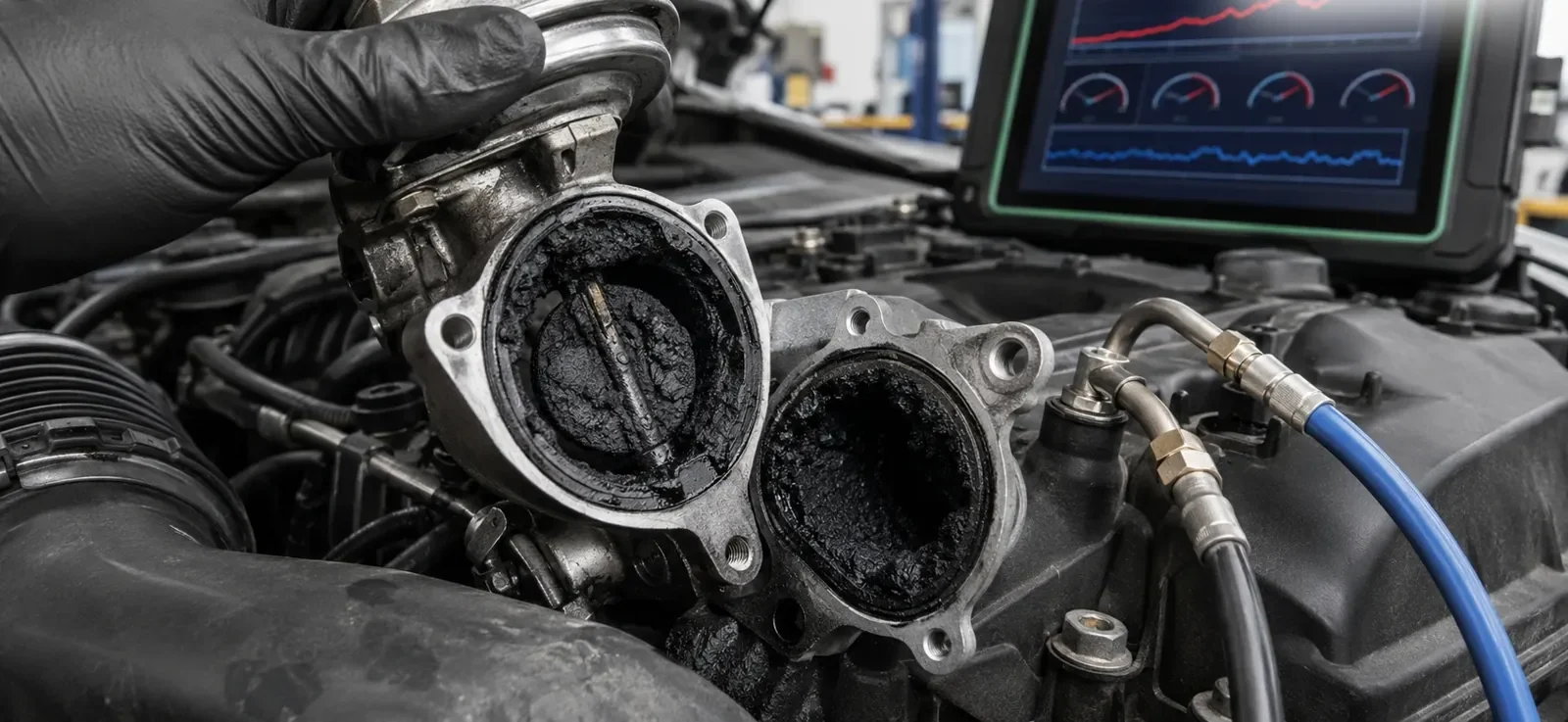 Owner Guides · 24 November 2026
Range Rover “Exhaust Filter Full” Warning: What It Means and How to Avoid Engine Damage
An amber exhaust filter warning is a request for a longer drive; a red one is not. Here is what each message means, how regeneration works and how a blocked filter can end up damaging the engine itself.
Read the guide →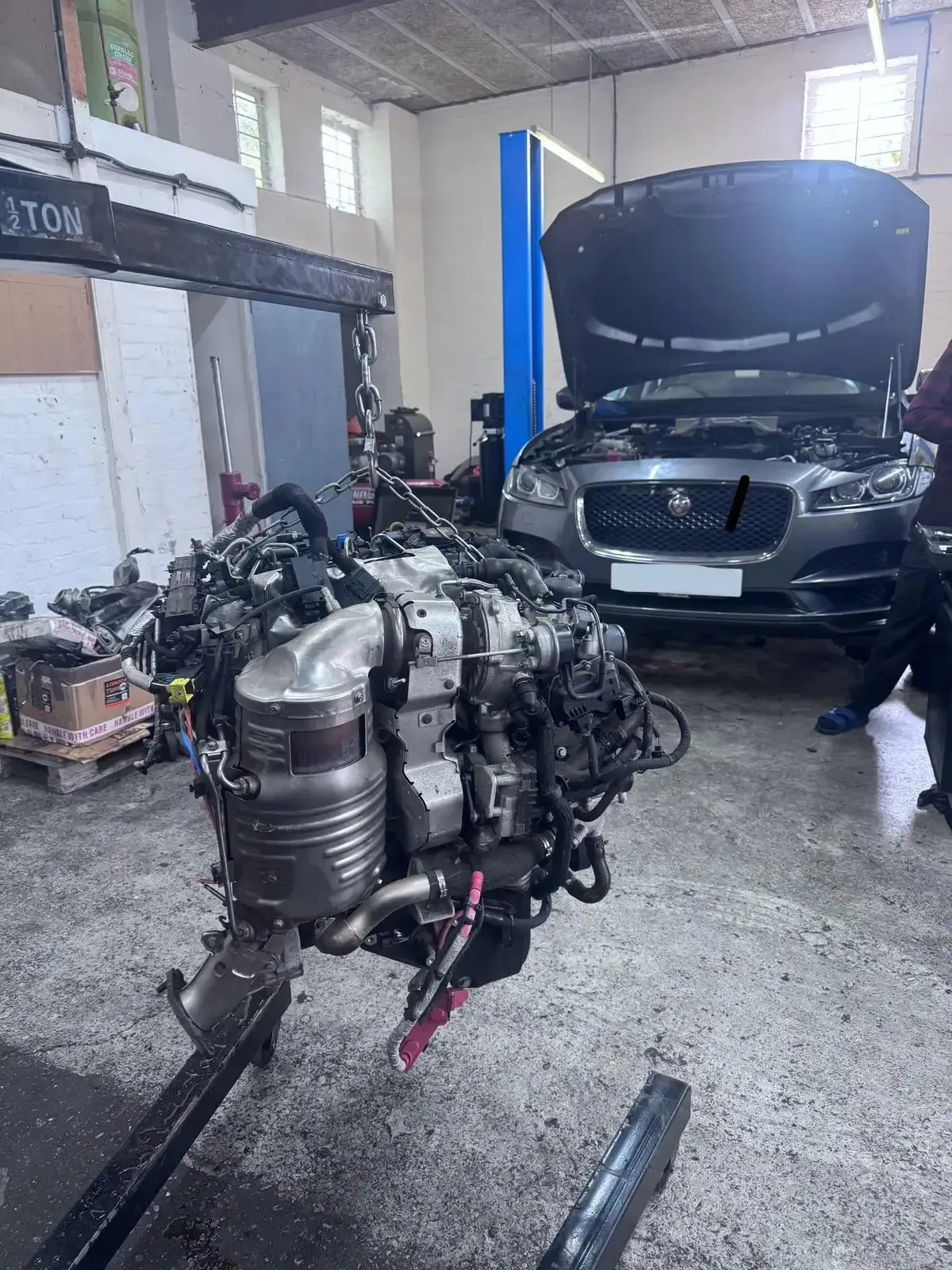 Engine Guides · 23 November 2026
Land Rover 200Tdi, Td5 and Discovery 2 Engine Rebuild Guide
An owner guide to rebuilding 200Tdi, 300Tdi, Td5 and Discovery 2 engines: common faults, what to check and what a rebuild covers.
Read the guide →