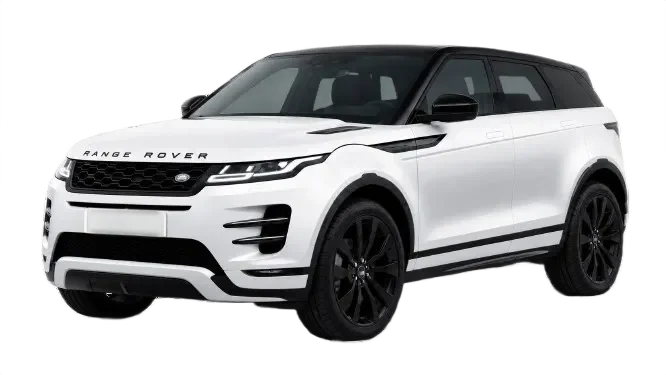
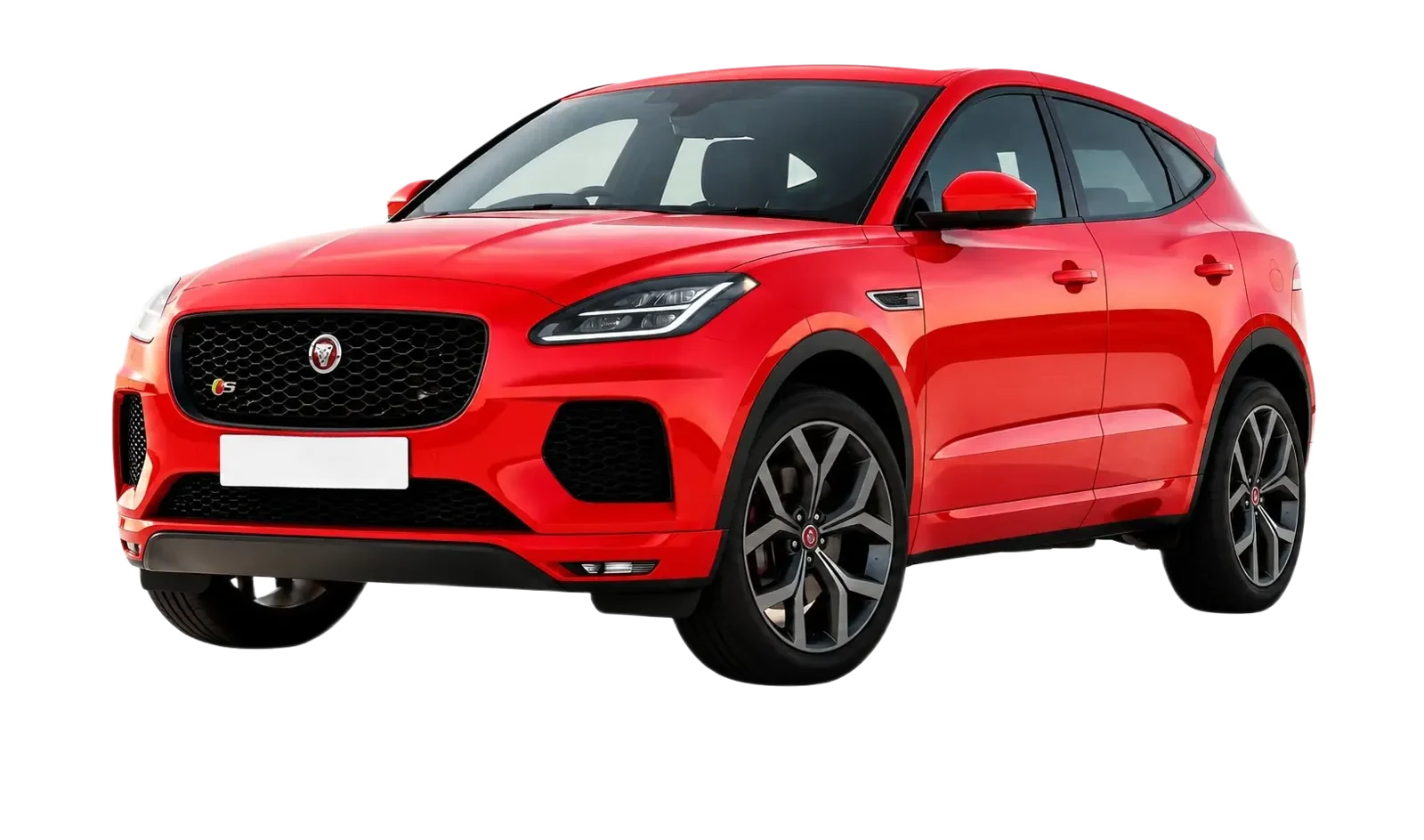
The PT153 is the 1.5-litre Ingenium three-cylinder turbo petrol. In the UK it is best known in the P300e plug-in hybrid Range Rover Evoque, Land Rover Discovery Sport and Jaguar E-Pace. We diagnose, repair and rebuild it, or supply and fit a matched replacement, with your choice of warranty.
PT153Ingenium 1.5P300e PHEVP1603-cylinder
6 months unlimited miles, or 12 months / 12,000 milesRainham & PeterboroughCollection within about 100 miles
Ingenium is Jaguar Land Rover's own modular engine family, built around a common cylinder of roughly 500 cc. Three of those cylinders make this 1.5-litre engine.
Wikipedia lists it as AJ150. Rebuilders and parts suppliers use the code PT153. Its sister engines each have their own page.
Years are approximate first UK model years. We confirm your exact code by VIN.
P300e engine fault?We separate engine faults from hybrid faults first. Send your reg and the symptoms.
Overview & history
The Ingenium 1.5 (PT153) explained
The PT153 shares its 83 mm bore and roughly 92.29 mm stroke with the four-cylinder Ingenium petrol, with three cylinders instead of four. JLR's sheets print 1,497 or 1,498 cc and a 10.5:1 compression ratio.
In the P300e it works with an electric rear axle drive and a 15 kWh lithium-ion battery. The combined system output is 309 PS and 540 Nm, and Wikipedia gives the petrol engine alone as 200 PS. JLR's 2021 E-Pace sheet also lists a P160 version of this engine at 160 PS and 260 Nm.
It is a small turbo engine working in a heavy car, and the hybrid system adds its own faults. We separate the two first. The engine faults we test for are coolant leaks, misfires and timing faults.
Technical data
Ingenium 1.5 (PT153) specification
From JLR technical data sheets.
Item
PT153 1.5 Ingenium petrol
Displacement
1,497–1,498 cc (JLR sheets print both)
Bore × stroke
83 × 92.29 mm (one sheet prints 92.287 mm)
Layout
Inline 3-cylinder turbo petrol
Compression ratio
10.5:1
Petrol engine output
200 PS in the P300e (Wikipedia)
P300e system output
309 PS / 540 Nm
P300e battery
15 kWh lithium-ion
P300e rear drive
Electric rear axle drive
Sources: JLR technical data for the Evoque PHEV range and the 2021 Jaguar E-Pace, plus Wikipedia (JLR Ingenium) for the petrol engine output.
Power outputs & badges
Which badge is which PT153?
In the cars we cover it is almost always the P300e plug-in hybrid. The 2021 model year E-Pace was also listed as a P160.
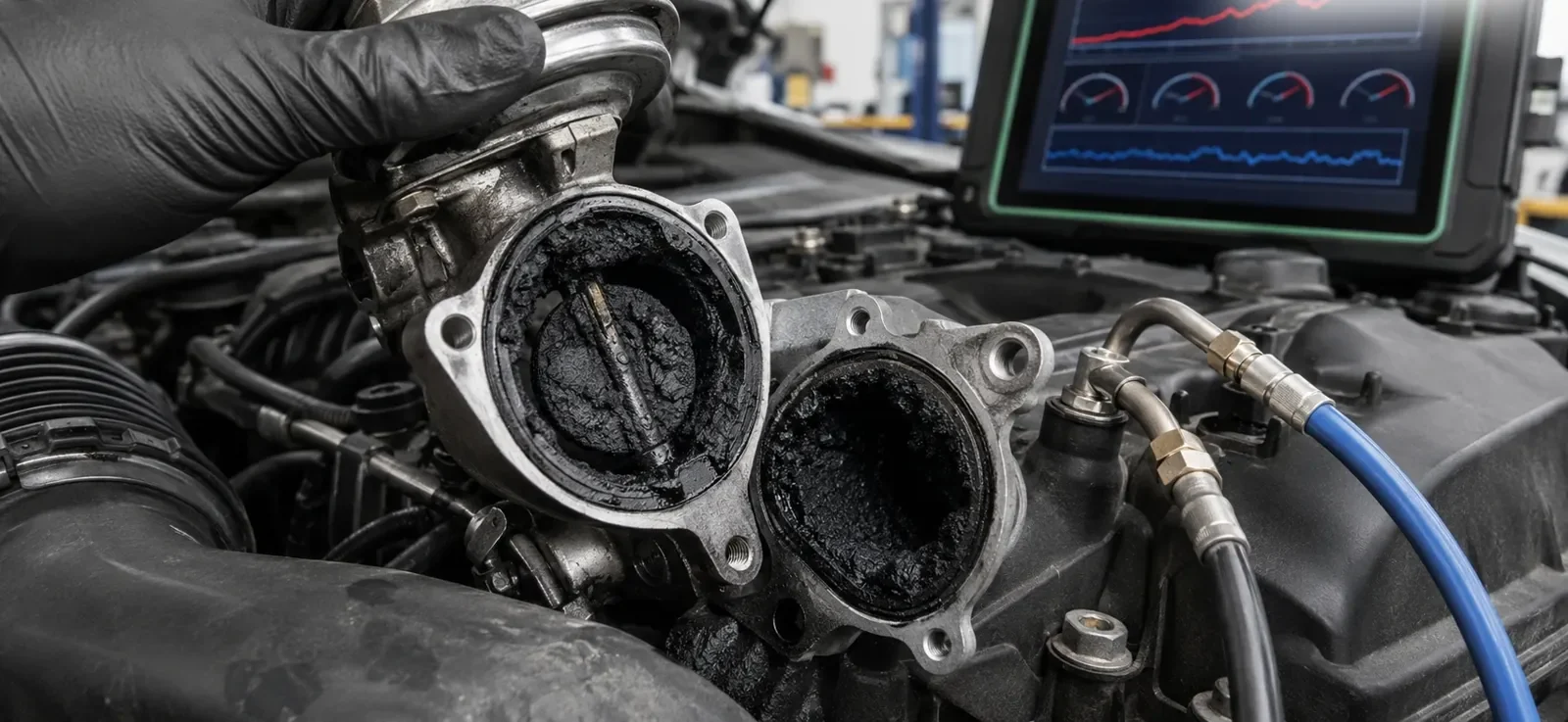
Loss of power, a whistle or whine, an engine light with boost codes, or oil in the intake pipes.
Cause
Wear in the turbo bearings, sticking wastegate or actuator, boost leaks in pipes and intercooler joints, or an oil feed problem.
Our fix
Smoke and pressure tests on the intake first. A boost leak or actuator is a repair. A failed turbo is replaced with new oil feed and return lines after we find why it failed.
A flashing engine light, shaking at idle, loss of power or a misfire code on one cylinder.
Cause
Failed coils or spark plugs, a leaking or sticking injector, or low compression on one cylinder.
Our fix
We find the cylinder, swap-test coils and plugs, check the injector and run a compression and leak-down test so we know whether the problem is ignition or mechanical.
An oil level that rises between checks, a fuel smell from the oil, or an oil warning on a car used mostly for short trips.
Cause
A plug-in hybrid often runs on the battery, so the petrol engine starts cold many times and may not reach full temperature. Fuel and moisture can then collect in the oil.
Our fix
We check the oil level and condition, read the engine data and advise on oil-change timing for the way the car is used.
A P300e that will not start the engine, runs it more than it should or shows hybrid warnings may not have an engine fault at all. The battery, the electric rear axle drive and the software can all cause symptoms that look like engine trouble.
We read the hybrid and engine data separately, then test the engine with compression, leak-down and coolant pressure tests. High-voltage parts are isolated with the correct procedure before any engine work.
For the PT153, plugs and coils are checked and renewed as needed, and the hybrid system is checked before and after the engine work. Full parts scope: engine rebuild.
Diagnosis
Engine and hybrid faults separated.
Removal & strip-down
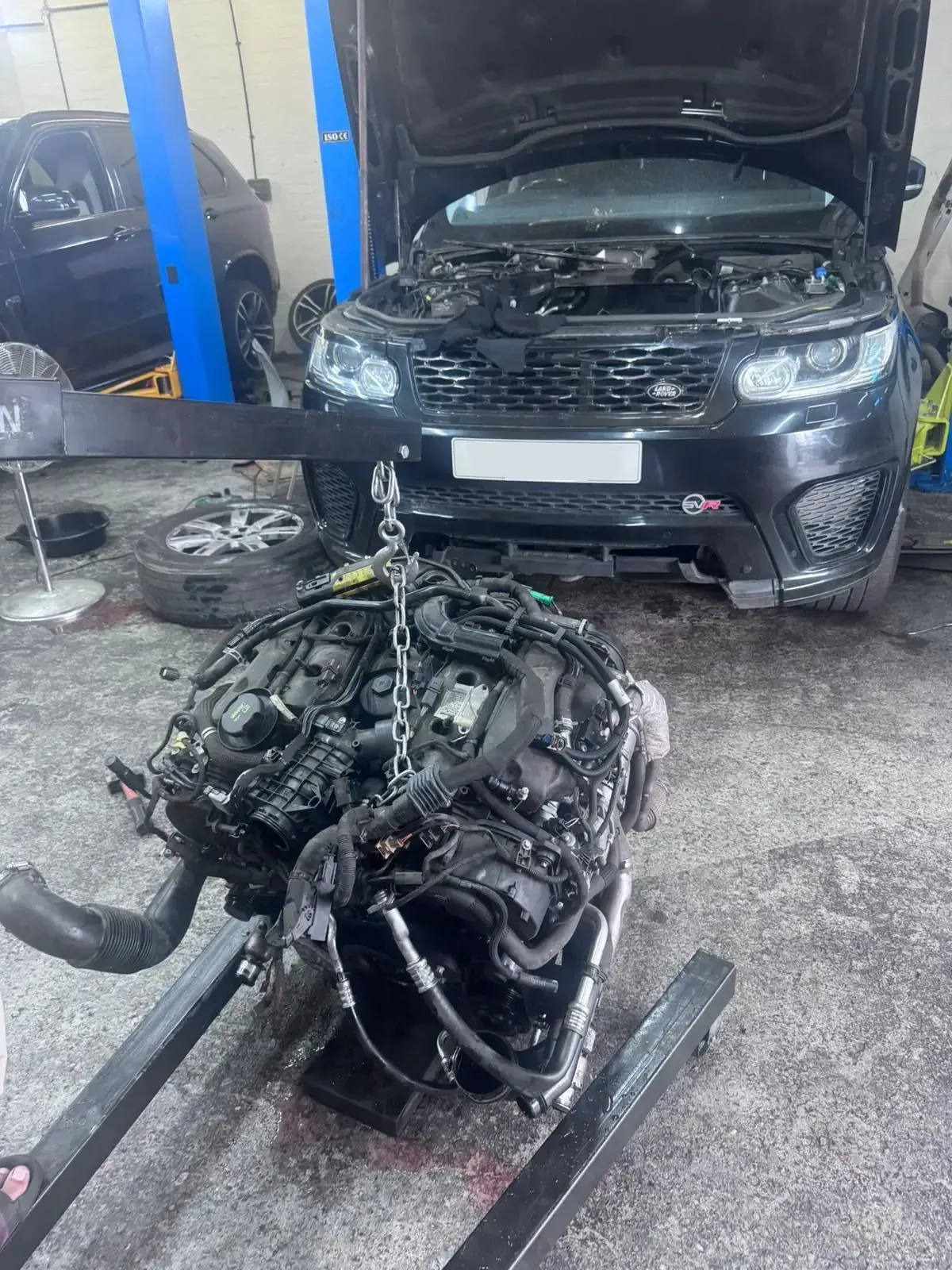
Engine lowered out with the subframe.
Cleaning & crack testing
Head and block pressure-tested.
Machining
Head skimmed and seats cut if needed.
New parts fitted
Timing kit, gaskets, plugs and coils if worn.
Assembly & testing
Timing set with the correct tools.
Refit, coding & road test
Hybrid system and coding checks.
From your first call to handback, see how it works.
Compatibility
Can I fit a different engine to my P300e?
The PT153 in a P300e is tied to the hybrid system and software. The only practical route is another PT153 of the same fitment.
Like for like: a PT153 of the same fitment, coded to the car.
P300e vs P160: different outputs and fitments, so we match the version.
To a PT204: not a practical swap.
Hybrid parts: checked and, if needed, repaired separately.
Whichever route you choose, the replacement unit is coded to the car, and we confirm compatibility against your VIN first.
Oil & aftercare
How to protect a rebuilt Ingenium 1.5
Use the oil grade and specification named in your handbook, and change it on time.
Check the oil and coolant levels monthly.
Get any cold-start rattle or misfire checked straight away.
Let the engine warm up before using full power, and idle briefly after hard driving.
Use the fuel grade your handbook recommends.
Never drive through an oil pressure or temperature warning.
P300e engine cost
What affects the quote for a Ingenium 1.5 rebuild or replacement?
A Ingenium 1.5 is quoted in writing after diagnosis.
PT153 is the trade code for the Ingenium 1.5-litre three-cylinder turbo petrol. In the UK it is mainly used in the P300e plug-in hybrid Range Rover Evoque, Discovery Sport and Jaguar E-Pace.
What are the P300e engine problems?
Many P300e warnings come from the hybrid system rather than the engine. On the engine itself, we test for coolant leaks, misfires and timing faults before advising anything.
What causes Ingenium 1.5 engine failure?
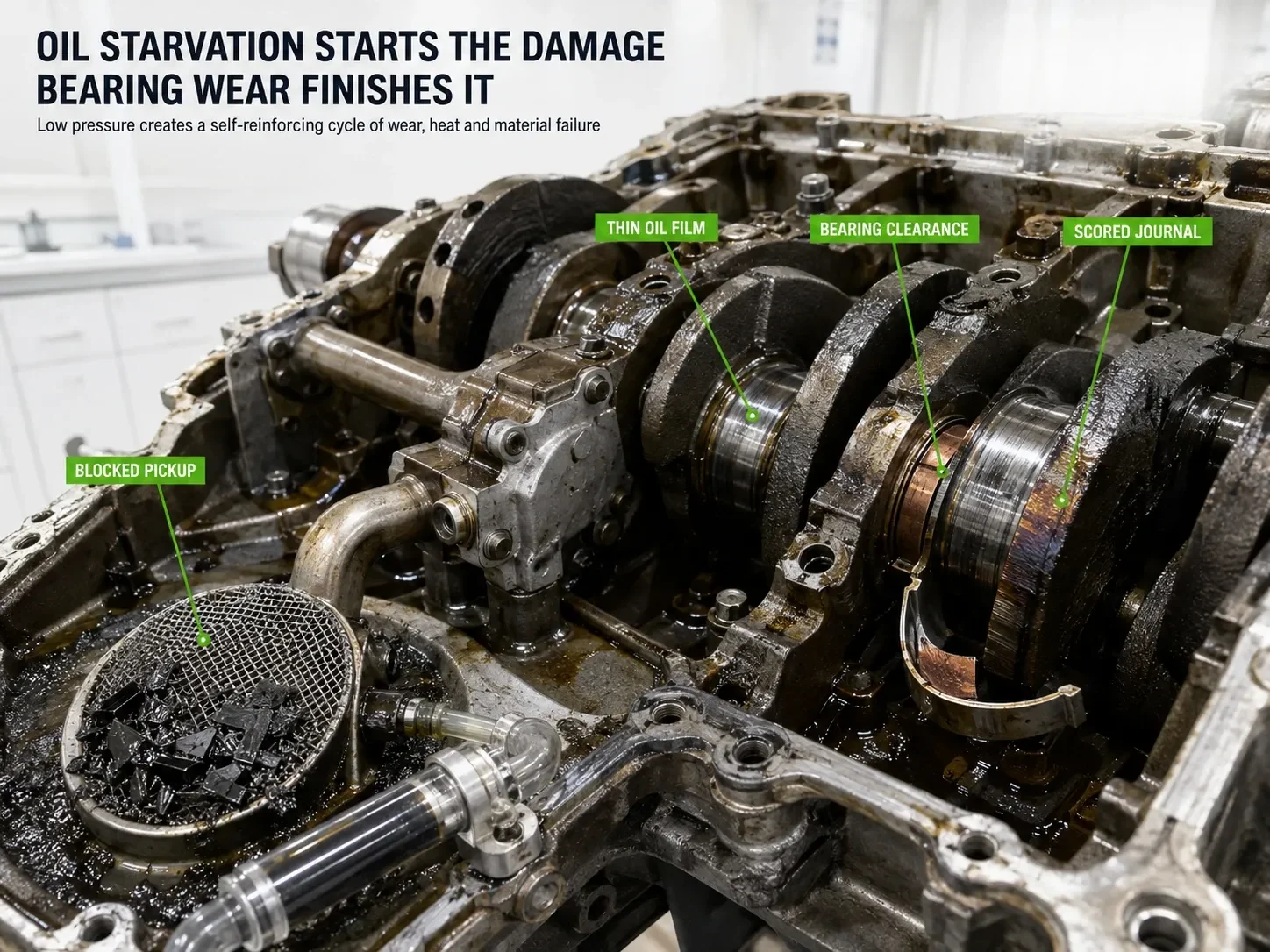
Serious failures usually follow overheating after a coolant leak, oil starvation or a timing fault. Acting on a coolant warning or an oil pressure light early is the best protection.
What causes 1.5 Ingenium or P300e turbo failure?
Oil supply problems, sticking actuators and boost leaks. We test the intake for leaks and check the oil feed before replacing a turbo.
What is the P300e system output?
Jaguar Land Rover quotes 309 PS and 540 Nm combined for the P300e. Wikipedia gives the petrol engine alone as 200 PS.
Is the P300e the same engine as the P400e?
No. The P300e uses the 1.5-litre three-cylinder PT153. The P400e uses the 2.0-litre four-cylinder PT204.
Can you work on the hybrid system too?
Yes. We diagnose the hybrid and engine sides separately, isolate the high-voltage system with the correct procedure, and complete the coding after any engine work.
How much does a P300e engine rebuild cost?
We don't publish a fixed price, because it depends on whether the fault is in the engine at all, the damage and whether you choose a rebuild or a replacement engine. Send your reg for a written quote.
What warranty do you give?
You choose between 6 months with unlimited miles or 12 months / 12,000 miles. Both options are explained on our warranty page and confirmed in writing with your quote.
Can you collect my car if the engine has failed?
Yes. We can arrange collection within about 100 miles of our Rainham and Peterborough workshops, including non-runners.