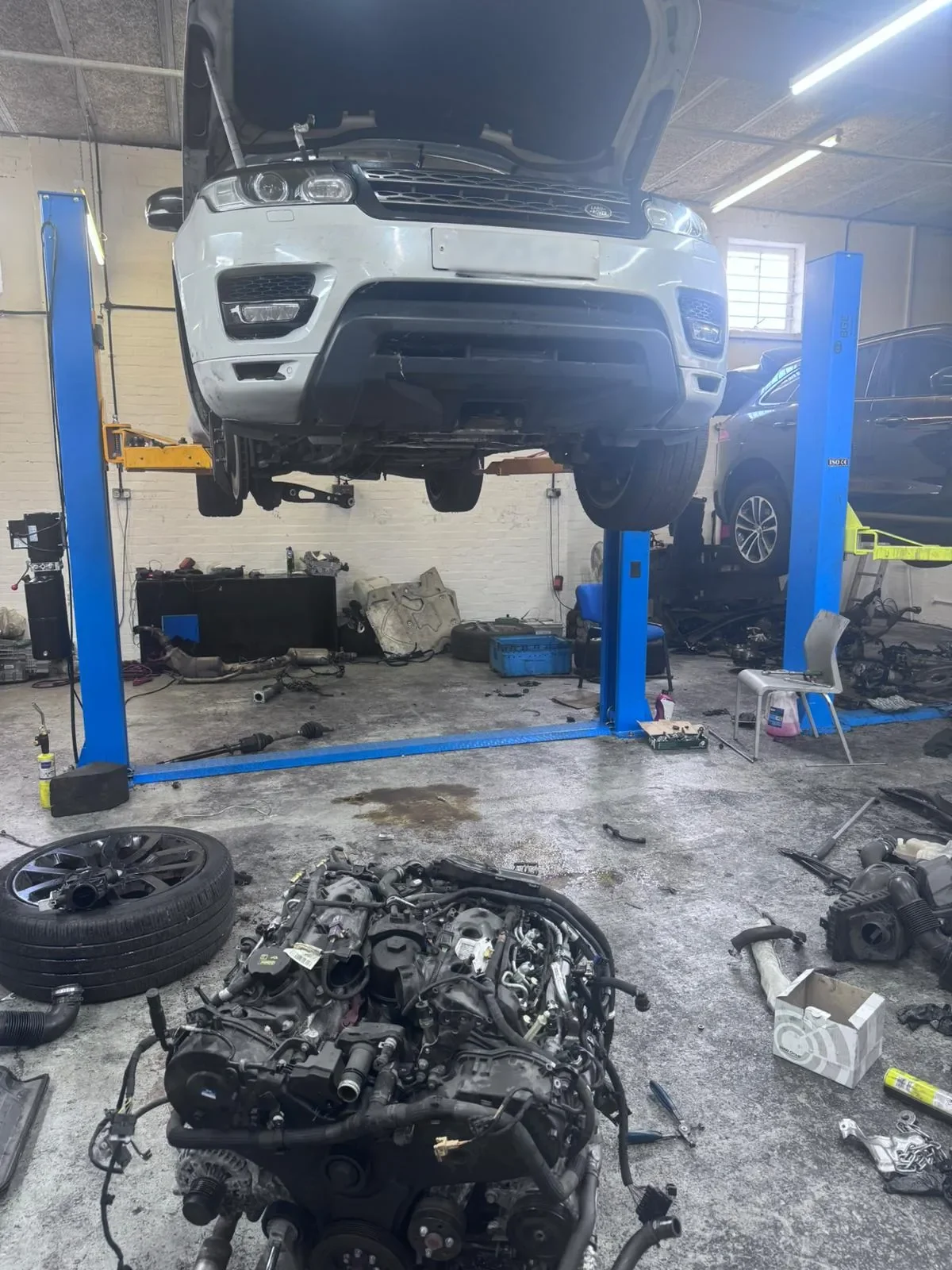
Short answer: A Range Rover Classic engine rebuild is usually a Rover V8 rebuild (3.5, 3.9 or 4.2), or a 200Tdi or 300Tdi diesel rebuild. A Range Rover P38 engine rebuild centres on the 4.0 and 4.6 V8, where wet cylinder liner slip and head gasket failure are well known, or the BMW 2.5 diesel. Cooling system weakness is often the root cause, so a proper rebuild addresses it too. We quote on older engines, so send the details first.
The Range Rover Classic and P38 are two generations of Range Rover with a lot of shared engine heritage. This guide covers the engines in each, where they tend to wear, and what a sensible rebuild includes.
Which engines does a Range Rover Classic or P38 have?
| Model | Engines | Notes |
|---|---|---|
| Range Rover Classic (1970 to 1996) | Rover V8 3.5, 3.9 and 4.2 petrol | The 3.9 arrived in 1989 and the 4.2 in the long-wheelbase LSE. |
| Range Rover Classic diesel | VM 2.4 turbo diesel, then 200Tdi and 300Tdi | Diesel became available from the mid-1980s. |
| Range Rover P38 (1994 to 2002) | Rover V8 4.0 and 4.6 petrol, BMW 2.5 turbo diesel | The V8s are developments of the Rover V8. The diesel is a BMW engine. |
Details varied by market and model year, so confirm against the engine number and the vehicle records.
What does a Range Rover Classic engine rebuild involve?
A Range Rover Classic engine rebuild is, for the petrol cars, a Rover V8 rebuild. The Rover V8 is an aluminium block and head engine. It is long-lived and widely supported, but it has known wear points.
- Timing gear and camshaft. Worn timing parts and camshaft lobes are common at high mileage.
- Bores. Wear is measured, and the bores are honed, rebored or relined as needed.
- Heads and gaskets. The heads are pressure tested and surfaced. Head gasket failure is common after overheating.
- Oil leaks and pressure. Seals, the oil pump and bearings are renewed as part of a full rebuild.
On the diesel Classics, the 200Tdi and 300Tdi are covered in more detail in our 200Tdi and Td5 rebuild guide. Our engine rebuild service page sets out how a rebuild works on current engines.
What changed with the Rover V8 from 3.5 to 3.9 to 4.2?
The 3.5 is the original capacity. The 3.9 increased the bore, and the 4.2 used a longer stroke. Capacity changes affect the pistons, bores and sometimes the crank, so parts are not always interchangeable between sizes. Ask for the capacity to be confirmed before parts are ordered, because it is easy to assume the wrong one on a vehicle that has had engine swaps.
Why is the Range Rover P38 4.0 and 4.6 V8 known for liner problems?
A Range Rover P38 engine rebuild on the V8 usually comes back to the cylinder liners and the head gaskets. The 4.0 and 4.6 use wet liners that can slip in the block over time. Once a liner moves, the head gasket seal is broken, coolant and combustion gases mix, and the engine overheats. Left running, this can warp the heads and damage bearings.
A good rebuild checks the block for liner movement and cracks, pressure tests and resurfaces the heads, renews gaskets and seals, and replaces timing and ancillary parts as needed. It should also include the cooling system, because the two problems feed each other.
Engine management differs by year and market, so fault diagnosis does too. Ask what diagnostic equipment the workshop has for your model year.
What about the P38 BMW diesel?
The 2.5 turbo diesel in the P38 is a BMW-built six-cylinder engine with a different character from the Rover V8. Wear points are typical diesel ones: the head and gasket, the turbo, the injection system and the bottom end after high mileage or neglect. A rebuild follows standard diesel practice and should include a pressure test of the head and a check of the crank and bearings.
Why do cooling systems matter so much on these Range Rovers?
Overheating is a common cause of failed Range Rover engines, whichever generation. Age makes the system weak: hoses soften, radiators clog or leak, expansion tanks crack and thermostats stick. A new engine in a tired cooling system will not last.
- Pressure test the system and look for slow leaks.
- Renew hoses, thermostat and water pump during the rebuild.
- Check the radiator flow, and the fan and its drive or controls.
- Use the correct coolant and refill method, so air locks are cleared.
What should I check on the vehicle before booking a rebuild?
Before you spend money on an engine, it is worth knowing whether the rest of the vehicle justifies it. Range Rover Classics and P38s often have a long list of age-related faults, and an engine rebuild only makes sense if you plan to keep the car going.
- Chassis and body. Corrosion in the chassis, bulkhead and sills can cost more to put right than the engine.
- Air suspension and electrics (P38). The air suspension and the electrical system are known sources of faults on the P38.
- Gearbox and transfer box. Check for noise, leaks and shifting problems before the engine goes back in.
- Paperwork. A V5C that matches the engine, plus any service history and receipts.
If you are weighing a rebuild against a replacement engine, our guide to a blown engine: rebuild or replace sets out the options and the paperwork that goes with each.
How do I describe the problem so I get a useful answer?
Whoever you contact about an older engine, a clear description saves time. Include the registration, the engine number if you can find it, the capacity and fuel type, the mileage, and what happened. Mention whether the engine overheated, whether you have seen coolant in the oil or oil in the coolant, and what the oil pressure gauge or light did. A few photos of the engine bay, the engine number and any visible damage help a lot.
Do not keep driving a knocking or overheating engine. It turns a repairable problem into a scrap one. Our engine problems guide explains what common symptoms usually mean, and our engine diagnosis page explains how we investigate a fault.
Can Land Rover Engine Rebuild rebuild a Range Rover Classic or P38 engine?
Our core work is 2010-onwards, and our Range Rover engine rebuild specialists pages cover the modern range, including the Range Rover L322, which followed the P38. We do not claim to be classic specialists. We do quote on older engines. Send the registration, the engine number and a few photos, and we will tell you straight whether our partner workshops in Rainham or Peterborough take the job on, and quote in writing. For modern buying advice, see our guide to the Range Rover engines to avoid.
Classic or P38 engine problem?
Send the registration, the engine number and photos, and tell us what the engine is doing. We will tell you plainly whether our partner workshops in Rainham or Peterborough take it on, and quote in writing before any work starts. Our core work is 2010-onwards, so we will say so if your engine is outside what we do.
Ask about an older Range Rover or call 020 8089 1373 / WhatsApp 07936 418074.
Frequently asked questions
What are the common problems with a Range Rover Classic engine?
On the Rover V8 petrol, worn timing gear, tired bores, oil leaks and overheating after cooling-system neglect are typical. On diesels, belt condition, head gasket failure and turbo wear come up often. A compression test and oil pressure check are the usual starting points.
What is wrong with the P38 4.0 and 4.6 V8?
The best-known problem is cylinder liner slip, where a wet liner moves in the block and breaks the head gasket seal. Overheating and head gasket failure are closely linked, so the cooling system matters as much as the engine.
Can a P38 BMW diesel engine be rebuilt?
Yes, if the block and crank are sound. The 2.5 diesel in the P38 is a BMW engine, so a rebuild follows normal diesel practice: strip, measure, head test and renew the wear parts. The surrounding cooling system should be checked too.
How do I check a Range Rover cooling system before a rebuild?
Look at hoses, radiator, expansion tank, thermostat, water pump and fan operation, and check for slow coolant loss. Overheating is often the cause of engine damage on these vehicles, so fix the cause as well as the engine.
Do you rebuild Range Rover Classic and P38 engines?
Our core work is 2010-onwards, but we quote on older engines too. Send the registration, engine number and photos and we will tell you whether our partner workshops in Rainham or Peterborough take the job on, and quote in writing.
Sources we checked
More guides
 Owner Guides · 24 November 2026
Range Rover “Exhaust Filter Full” Warning: What It Means and How to Avoid Engine Damage
An amber exhaust filter warning is a request for a longer drive; a red one is not. Here is what each message means, how regeneration works and how a blocked filter can end up damaging the engine itself.
Read the guide → Engine Guides · 23 November 2026
Land Rover 200Tdi, Td5 and Discovery 2 Engine Rebuild Guide
An owner guide to rebuilding 200Tdi, 300Tdi, Td5 and Discovery 2 engines: common faults, what to check and what a rebuild covers.
Read the guide →Buying Guides · 22 November 2026Range Rover Engines to Avoid, and the Ones With the Best Record
A buyer-focused look at every Range Rover engine since 2013, from the TDV6 to the newest straight-sixes, with the documented weak points of each and how to check a car before you buy.
Read the guide →