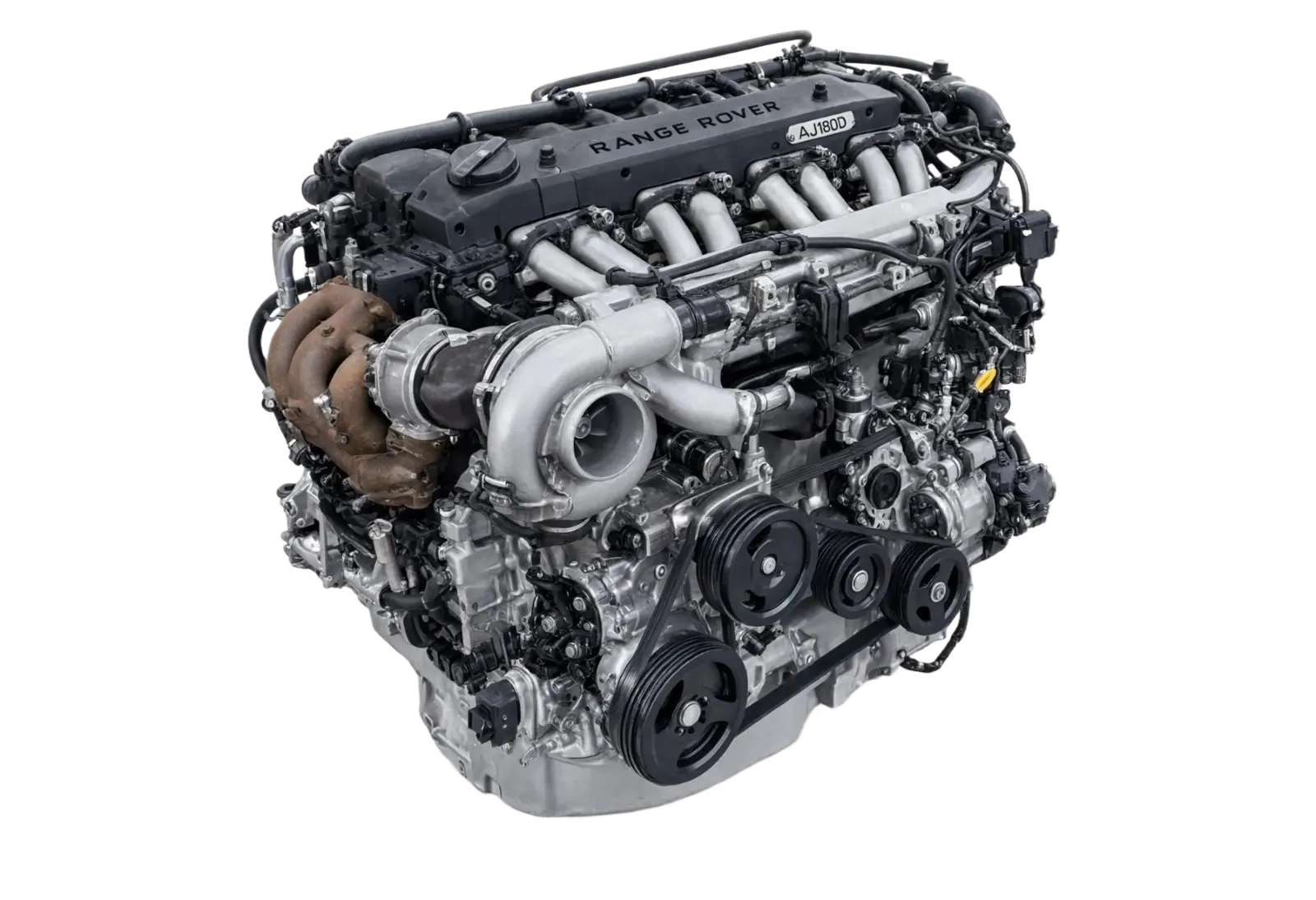
Short answer: The best-documented Ingenium problems affect the 2.0 four-cylinder diesel: timing chain stretch at the rear of the engine and fuel diluting the oil on cars that do mainly short trips. The 2.0 petrol has JLR service messages for thermostat-housing coolant leaks and early oil changes, and some six-cylinder engines are covered by recall R/2024/255 for the oil filter housing. Rather than avoiding one badge, avoid any Ingenium with gaps in its service history, an unexplained cold-start rattle or a rising oil level.
"Ingenium" is not one engine. It is Jaguar Land Rover's own modular family, built at its Engine Manufacturing Centre in the UK since 2015, and it now includes four-cylinder diesels and petrols, a three-cylinder used in plug-in hybrids, and straight-six diesels and petrols. They share bore spacing and design ideas, including chain-driven twin camshafts and a variable-flow oil pump, but the faults owners search for are not spread evenly across them. Asking "are Ingenium engines reliable?" gets a different answer for each version.
Which Ingenium engines are there?
| Engine | Typical badges | Found in |
|---|---|---|
| 2.0 four-cylinder diesel | TD4, SD4, eD4, D150, D180, D240, later D165 and D200 mild hybrid | Evoque, Discovery Sport, Velar, Discovery 5, Defender, Range Rover Sport, Jaguar XE, XF, E-Pace and F-Pace |
| 2.0 four-cylinder petrol | Si4, P200, P250, P300, and in the P400e plug-in hybrid | The same range, plus the F-Type P300 |
| 1.5 three-cylinder petrol | P160, P300e | E-Pace, Evoque and Discovery Sport plug-in hybrids |
| 3.0 straight-six diesel | D250, D300, D350 | Range Rover, Range Rover Sport, Velar, Defender, Discovery, F-Pace |
| 3.0 straight-six petrol | P340, P360, P400 mild hybrid, plus the six-cylinder plug-in hybrids | Range Rover, Range Rover Sport, Velar, Defender, Discovery, F-Pace |
The exact power output and engine code for your car are on its V5C and in the build data. Our engines hub lists every code with the models that use it.
What goes wrong with the 2.0 Ingenium diesel?
This is the engine behind most "Ingenium problems" searches, because it was the first and is the most widely fitted. Three faults come up again and again in specialist write-ups.
Timing chain stretch. The chain drive sits at the rear of the engine, at the gearbox end, on a hydraulic tensioner with plastic guides. It is not a service item and cannot be adjusted. As the chain, guides and tensioner wear, the first sign is usually a metallic rattle for a few seconds after a cold start. Later, the engine logs camshaft and crankshaft correlation codes, typically P0016 to P0019 or P0341. Stedmans and LR Direct both describe revised chain, guide and tensioner parts arriving around 2019, but JLR has not published a build cut-off, so age alone does not tell you which parts a car has. There has been no UK recall for the chain. We cover the repair itself in detail on the 2.0 Ingenium diesel page.
Oil dilution. To clean the diesel particulate filter, the engine injects extra fuel to raise exhaust temperatures. If the journey ends before that regeneration finishes, some of the fuel ends up in the sump. The oil level rises, the oil smells of diesel and its viscosity drops. Thin oil is bad for a hydraulic chain tensioner and for crankshaft bearings, which is why chain wear and short-trip use tend to turn up together.
DPF and EGR faults. These are emissions faults rather than engine failures, but blocked filters and sooted EGR valves bring warning lights, reduced power and, if ignored, the dilution problem above.
Are the Ingenium petrol engines more reliable?
The 2.0 petrol does not share the diesel's DPF-driven oil dilution, and chain stretch is far less discussed on it. It does have its own documented issues, and JLR's technical documents describe them clearly.
- Coolant leaks at the thermostat housing. JLR Special Service Message SSM76249, dated February 2025, covers 2020 to 2024 model-year Defender, Discovery, Discovery Sport, Evoque and Velar with the 2.0 petrol. It describes a low-coolant warning and leaks from the welded spigot cap or the housing gasket. The cause was still under investigation when it was issued.
- Oil degradation in heavy urban use. Service Action N892v2, issued in November 2024, says that on certain 2020 model-year-on 2.0 petrol vehicles, arduous drive cycles speed up oil degradation and can leave sludge deposits in the high-pressure oil galleries and the continuously variable valve lift unit. Affected cars get an extra oil and filter change on top of their normal services.
Neither of these is a reason to rule a petrol car out. Both are reasons to check the coolant level, to ask whether the campaign work has been done, and to change the oil more often if the car mostly does town miles. The three-cylinder 1.5 is mainly found in plug-in hybrids. Diagnosing a fault on one of those starts with separating the hybrid system from the engine itself.
What about the 3.0 straight-six Ingenium?
The six-cylinder diesel and petrol arrived later, with 48-volt mild-hybrid systems on most versions. The headline issue so far is a recall rather than a pattern of wear. DVSA recall R/2024/255 covers some vehicles whose oil filter housing may crack and leak oil onto hot engine parts. The fix is a replacement housing at a retailer, and you can check any registration on the GOV.UK recall checker. On the diesel, short-trip use brings the same DPF, EGR and oil-level warnings as the four-cylinder. Mild-hybrid faults, such as stop-start not working or 48-volt warnings, are often not engine faults at all.
So which Ingenium engine should you avoid?
We would not tell anyone to avoid a badge outright, because condition and history matter more than the code. The table shows where the documented risk sits:
| Engine | Documented concern | Higher-risk example | Lower-risk example |
|---|---|---|---|
| 2.0 diesel | Rear timing chain wear, oil dilution, DPF | Early car, town use, long or missed oil changes, any cold-start rattle | Regular motorway miles, oil changed on time to the JLR spec, chain kit already replaced with invoices |
| 2.0 petrol | Thermostat housing leaks (SSM76249), oil degradation in urban use (N892v2) | Coolant warnings, no record of the early oil change | Campaign work done, coolant steady, oil changed on time |
| 3.0 I6 diesel and petrol | Recall R/2024/255; DPF, EGR and mild-hybrid faults | Recall still open, short-trip diesel | Recall complete, mixed driving, full history |
What should I check before buying a car with an Ingenium engine?
- Hear it start from cold. Ask the seller not to run it before you arrive, and listen at the back of the engine for a rattle in the first few seconds.
- Pull the dipstick or check the electronic level. Oil that is above the maximum mark or smells of diesel points to dilution.
- Read the service history for dates and mileages, not just stamps. Long gaps matter more than who did the work.
- Run the registration through the GOV.UK recall checker, and ask a retailer about any outstanding service actions.
- Have the fault memory read with JLR-capable equipment. Stored timing correlation, DPF or coolant codes tell you more than a test drive.
Is it worth repairing an Ingenium engine that has failed?
Usually, yes, depending on what failed. A stretched chain caught at the rattle stage is a timing chain replacement. A chain that has jumped, or a bearing that has failed through diluted oil, needs the engine opened up and often an engine rebuild. The model pages, such as the Discovery Sport and Evoque L551, show which Ingenium versions each car was built with.
Worried about an Ingenium engine?
Tell us the registration and what you are hearing or seeing. We identify the exact engine, diagnose the fault and quote for repair, chain replacement or rebuild, with collection and delivery within about 100 miles of the Rainham and Peterborough workshops. Rebuilds come with 6 months with unlimited miles, or 12 months or 12,000 miles of warranty.
Ask about your Ingenium or call 020 8089 1373 / WhatsApp 07936 418074.
Frequently asked questions
Who makes the Ingenium engine?
Jaguar Land Rover designed the Ingenium family itself. It has built the engines at its Engine Manufacturing Centre in the UK since 2015, and Wikipedia also lists production at the Chery Jaguar Land Rover joint venture in China from 2017.
Are later Ingenium diesel engines more reliable?
Specialists report revised timing chain, guide and tensioner parts arriving around 2019, but JLR has not published a build cut-off. Treat every 2.0 diesel on its own evidence: cold-start noise, oil condition and service history.
Is there a recall for the Ingenium timing chain?
No UK recall has been issued for the 2.0 Ingenium diesel timing chain. Recall R/2024/255 concerns the oil filter housing on some six-cylinder Ingenium engines, which is a different part.
Why does my Ingenium diesel oil level keep rising?
Usually because DPF regenerations are being interrupted by short journeys, and the extra fuel used to heat the filter is getting into the oil. Have the oil changed and the cause checked, because diluted oil protects the chain and bearings poorly.
Can a stretched Ingenium chain be tightened?
No. The tensioner is hydraulic and adjusts itself, so once the chain and guides are worn, the fix is a replacement kit. On transverse models the gearbox has to come off, or the engine has to come out, to reach it.
Sources we checked
- Wikipedia, Ingenium engine family
- Stedmans, 2.0 Ingenium engine problems (chain at rear, no UK recall, revised parts c.2019, fault codes)
- LR Direct, 2.0D Ingenium timing chain faults
- JLR SSM76249, Ingenium I4 2.0L petrol thermostat housing coolant leak (via NHTSA)
- JLR Service Action N892v2, engine oil and filter change, 2.0 petrol (via NHTSA)
- GOV.UK, check if a vehicle has been recalled (R/2024/255)
- JLR media technical data sheets (badges and outputs), logged in our spec-sources file
More guides
 Engine Guides · 25 November 2026
Range Rover Classic and P38 Engine Rebuild: V8 and Diesel Guide
An owner guide to Range Rover Classic and P38 engines: Rover V8, 200Tdi and BMW diesel, common wear points and what a rebuild involves.
Read the guide →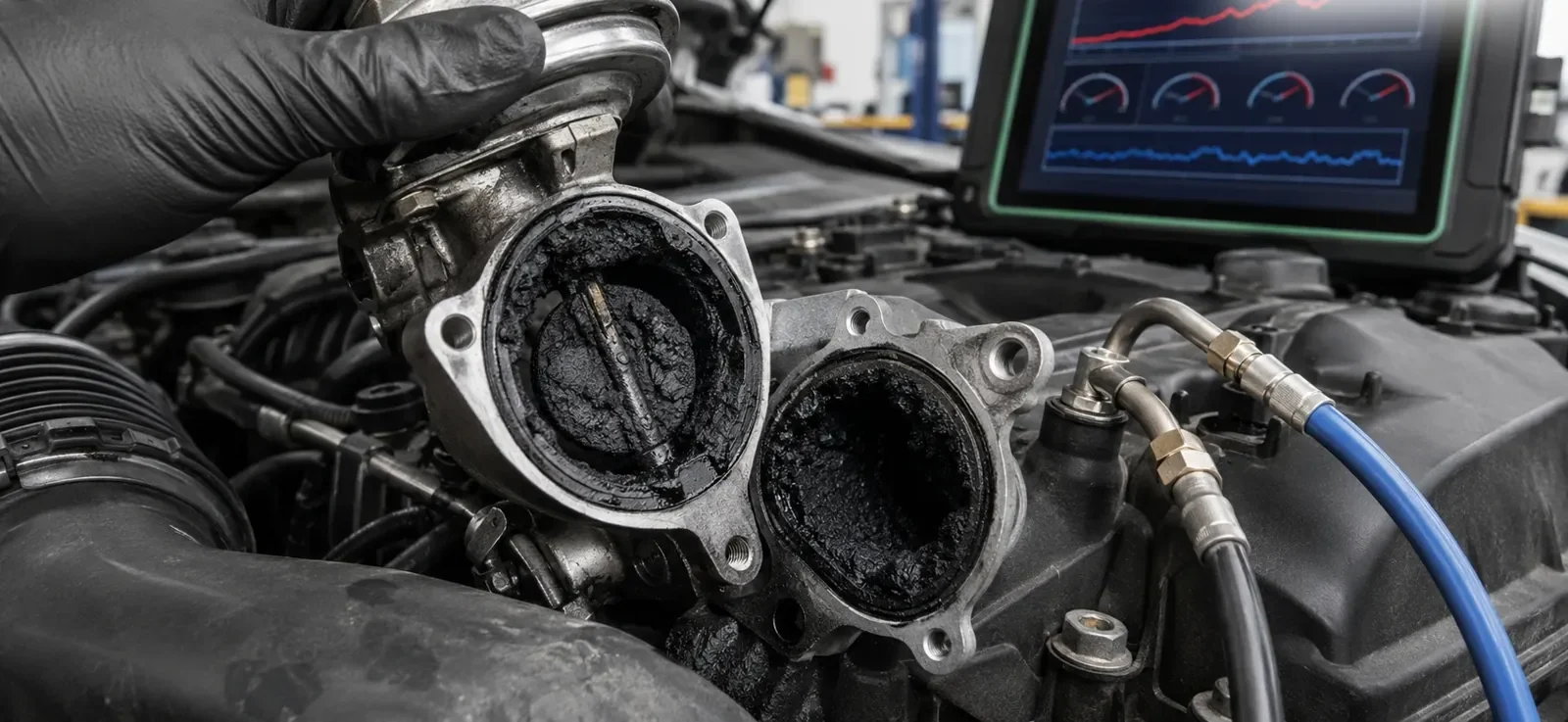 Owner Guides · 24 November 2026
Range Rover “Exhaust Filter Full” Warning: What It Means and How to Avoid Engine Damage
An amber exhaust filter warning is a request for a longer drive; a red one is not. Here is what each message means, how regeneration works and how a blocked filter can end up damaging the engine itself.
Read the guide → Engine Guides · 23 November 2026
Land Rover 200Tdi, Td5 and Discovery 2 Engine Rebuild Guide
An owner guide to rebuilding 200Tdi, 300Tdi, Td5 and Discovery 2 engines: common faults, what to check and what a rebuild covers.
Read the guide →