Rainham, Peterborough & about 100 miles from eachRainham & PeterboroughMon–Fri 9:00–18:00 · Sat 9:00–14:00
Choose your make
Land Rover
Range Rover
Jaguar
More
Engines
Services
Areas we cover
Mon–Fri 9:00–18:00 · Sat 9:00–14:00
Ingenium engine specialists · Land Rover, Range Rover & Jaguar

Ingenium 2.0 diesel (204DTD/DTA) Engine Rebuild & Replacement

The 2.0-litre Ingenium diesel is the four-cylinder engine behind the TD4, SD4, eD4, D150, D165, D180, D200, D240, 20d and 25d badges. We rebuild it in our own workshops, or supply and fit a reconditioned or checked replacement unit, with your choice of warranty.

204DTD204DTA204DTY (MHEV)Jaguar AJ200D2015 onwards
6 months unlimited miles, or 12 months / 12,000 milesRainham & PeterboroughCollection within about 100 miles

Get your free engine quote

Takes under a minute · No obligation

100% free
  1. Your vehicle
  2. Fault and service
  3. Your details

Your vehicle

Fault and service

Any other symptoms? (optional)
Does the vehicle still drive?
Do you need collection?

Your details

We use your details only to reply to this enquiry.

Engine familyJLR Ingenium (AJ200D)
Layout2.0 litre (1,999 cc) inline-4, 16v DOHC
Built from2015 (Jaguar XE first)
Timing driveChain, at the flywheel end
EmissionsEuro 6 (DPF, EGR, most with SCR/AdBlue)
Made atEngine Manufacturing Centre, i54 Wolverhampton
Ingenium engine family

What is the Ingenium engine?

Ingenium is the name Jaguar Land Rover gave to its own family of modular engines, designed in-house and built at the Engine Manufacturing Centre on the i54 business park near Wolverhampton. The plant opened in October 2014 and the first Ingenium engine, this 2.0-litre four-cylinder diesel, went on sale in the Jaguar XE in 2015. Before Ingenium, most Land Rover and Jaguar diesels came from the Ford and PSA partnership: the 2.2 TD4/SD4, the 2.7 and 3.0 V6 and the 4.4 V8.

The family is built around a common cylinder size of roughly 500 cc. That is why the same basic design appears as a three-cylinder 1.5, a four-cylinder 2.0 and a six-cylinder 3.0, in both diesel and petrol form. When people search for the "Jaguar Ingenium engine" or the "Land Rover Ingenium engine", they are talking about the same engines. Jaguar parts catalogues tend to use AJ codes (AJ200D, AJ20D4) and Land Rover catalogues use codes such as 204DTD and 204DTA.

This page covers the 2.0 Ingenium diesel. The other members of the family each have their own page:

Ingenium engineMain codesFrom
2.0 diesel, 4-cyl (this page)204DTD · 204DTA · 204DTY2015
2.0 petrol, 4-cylPT2042017
3.0 I6 diesel MHEVAJ20D62020
3.0 I6 petrol MHEVAJ20P62019
1.5 petrol, 3-cylPT1532019

Years are approximate first UK model years. Your exact code depends on model, year and output. Send your reg and we will confirm it.

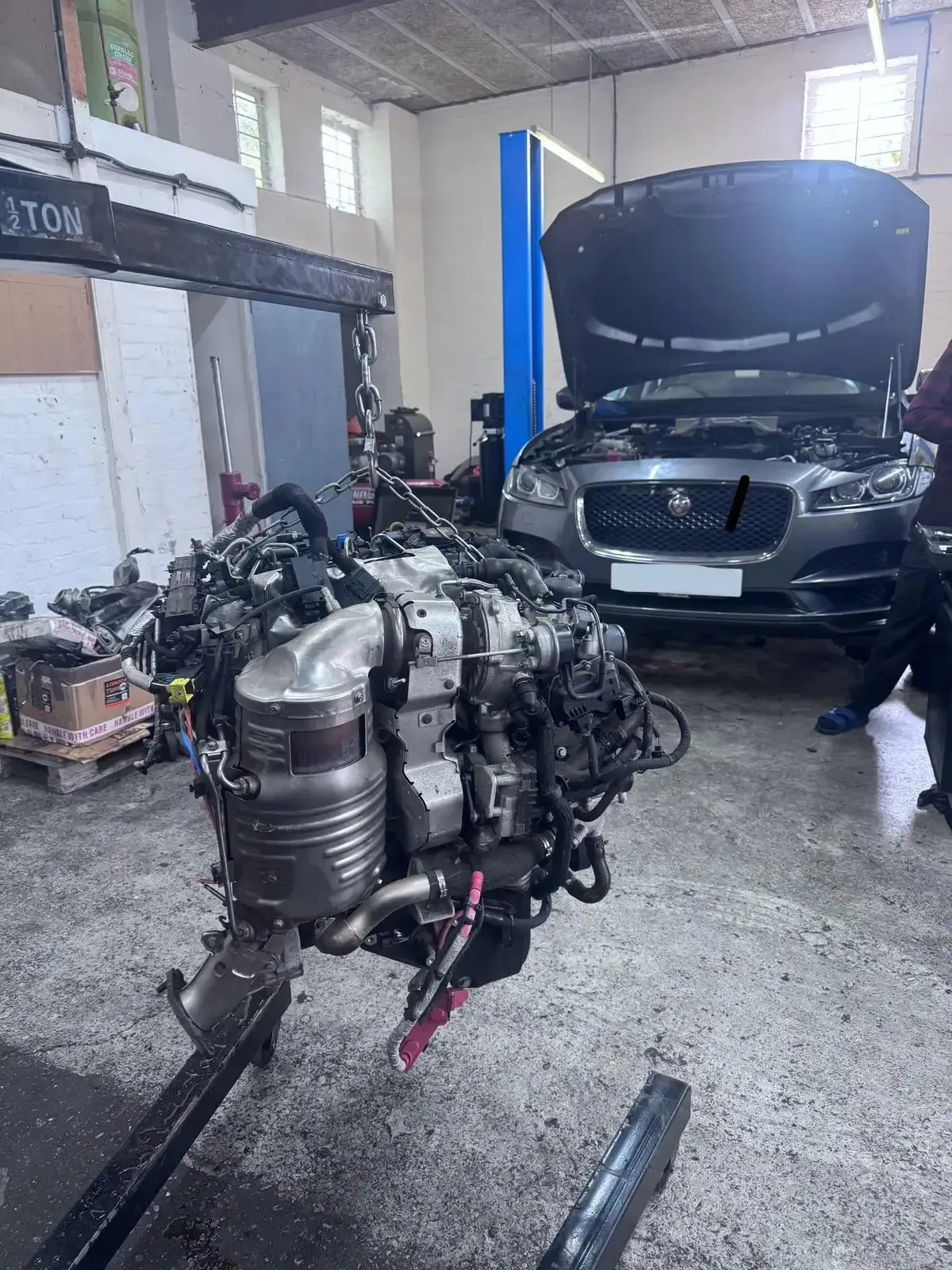
Jaguar Land Rover 2.0 Ingenium diesel engine (204DTD) removed from a Range Rover Velar D180
Not sure which code?Send your reg or VIN. We confirm 204DTD, 204DTA or 204DTY before we quote.
Overview & history

The 2.0 Ingenium diesel, 204DTD and 204DTA explained

The 2.0 Ingenium diesel has an aluminium block with cast-iron cylinder liners, an aluminium 16-valve head with twin overhead camshafts, and Bosch common-rail injection. JLR's own workshop documentation gives a fuel rail pressure of 1,800 bar for the single-turbo engine, with the high-pressure pump chain-driven from the crankshaft. It was designed to be light and efficient. It has a variable-flow oil pump, a variable coolant pump with split cooling so the block warms up quickly, solenoid-controlled piston cooling jets and variable timing on the exhaust camshaft.

204DTD is the single-turbo version with a variable-geometry turbocharger. It covers the 150, 163 and 180 PS outputs, sold as TD4, eD4, D150, D180, Jaguar 20d and E-Performance. 204DTA adds a second turbocharger in a two-stage, sequential layout and produces 240 PS and 500 Nm. That is the SD4, D240 and Jaguar 25d. From 2019 many models gained a 48-volt mild-hybrid (MHEV) system. From around the 2021 model year the updated 204DTY engine took over as the D165 and D200, built to the tighter Euro 6d standard.

The weak points are well documented, and they are linked. The timing chain sits at the rear of the engine, at the gearbox end, where it cannot be inspected at a service. The DPF regenerates by injecting extra fuel, and on short journeys that fuel can wash into the sump. Diluted oil then wears the chain, the tensioner, the turbo and the crankshaft bearings. Most of the engines that reach us have one or more of these problems. Each one is covered below so you can match it to what your car is doing.

Technical data

2.0 Ingenium diesel specification

These figures come from JLR workshop literature and owner handbooks, cross-checked against independent references. Where sources disagree we say so rather than guess.

Item204DTD (single turbo)204DTA (twin turbo)204DTY (MHEV era)
Displacement1,999 cc (1,998.7 cc quoted by JLR)1,999 ccAbout 2.0 litres
Bore × stroke83.0 × 92.35 mm83.0 × 92.35 mm83 mm bore, about 92.3 mm stroke
LayoutInline 4-cylinder, DOHC, 4 valves per cylinder, aluminium block with cast-iron liners, aluminium head
Compression ratio15.5:115.5:1Revised for Euro 6d. Figure not confirmed by JLR
AspirationSingle variable-geometry turboTwo-stage sequential twin turboSingle turbo
InjectionBosch common rail, 1,800 barBosch common railCommon rail, higher pressure
Timing driveChains at the rear (flywheel end), hydraulic tensioner. The high-pressure fuel pump is chain-driven
Emissions kitDPF, high- and low-pressure EGR, SCR (AdBlue) on most UK cars. 204DTY meets Euro 6d
Engine oilSAE 0W-30 meeting JLR STJLR.03.5007, as named in UK handbooks
Oil capacity (with filter)About 6.5 litresAbout 7.0 litres (Discovery Sport and E-Pace 240 PS, Discovery, Defender)Check handbook by model
Mild hybrid48 V MHEV on many 2019–2020 Evoque L551 and Discovery Sport versions48 V MHEV on most versions

Capacities are guides from owner handbooks. Always fill to the dipstick or the level shown in the instrument cluster. We confirm the spec for your VIN when we quote.

Power outputs & badges

Which badge is which Ingenium diesel?

The badge on the tailgate tells you the output, and the output usually tells us the engine code. The catch is that badges changed over the years, so the year matters as much as the badge.

BadgeCodePowerTorqueTypical years
eD4 / TD4 150, D150, Jaguar 2.0d 150204DTD150 PS (110 kW)380 Nm2015–2020
Jaguar 20d 163 / E-Performance204DTD163 PS (120 kW)380 Nm2015–2019
TD4 180, D180, Jaguar 20d 180204DTD180 PS (132 kW)430 Nm2015–2020
SD4 240, D240, Jaguar 25d204DTA240 PS (177 kW)500 Nm2016/17–2020
Defender D200 / D240 (2.0)2.0 Ingenium diesel (confirm by VIN)200 / 240 PS430 Nm2020 model year only
D165 MHEV204DTY163 PS (120 kW)380 Nm2020/21 onwards
D200 MHEV204DTY204 PS (150 kW)430 Nm2020/21 onwards

"D200" on a 2021-on Defender is the 3.0 six-cylinder, not the 2.0. See the Ingenium 3.0 I6 diesel page.

Vehicles fitted

Which cars use the 2.0 Ingenium diesel?

Almost every four-cylinder diesel Land Rover, Range Rover and Jaguar sold in the UK from 2015 onwards. Earlier Evoque and Discovery Sport models used the Ford/PSA 2.2 diesel (224DT), which has a cam belt and a different set of faults.

Identify your engine

Which engine do I have?

You don't need to open the bonnet. Any of these will tell us what we need:

  • Your registration. This is the quickest route. We look up the VIN and build data and match the exact engine code and output.
  • Your V5C. The VIN (section E) and engine size (P.1) are printed on it. The VIN is also visible at the base of the windscreen and on the door pillar label.
  • The badge and year. Use the table above. A 2018 Velar D240 is a 204DTA, and a 2021 Evoque D200 is a 204DTY.
  • The engine itself. The code and serial number are stamped on the block, but it is hard to see without removing covers. We check it on arrival anyway.

The code matters because the 204DTD, 204DTA and 204DTY share a lot of parts but are not straight swaps. Turbos, injectors, ECU calibration and MHEV hardware differ. A quote based on the wrong code is a quote that changes later, and we would rather get it right at the start.

If your car is…It is most likely
Discovery Sport / Evoque TD4, 2016–2019204DTD
Any SD4, D240 or Jaguar 25d204DTA
Velar D180, 2017–2020204DTD
D165 or D200 MHEV, 2021 on204DTY
Evoque or Discovery Sport before 2016 MY224DT (2.2), not Ingenium
Defender D200 from 2021 MY3.0 I6 (AJ20D6), not this engine

This is a guide only. Model-year changeovers mean a few cars fall either side, so we confirm by VIN.

Ingenium engine problems

2.0 Ingenium engine problems: the faults we see

These are the Ingenium engine problems that bring 2.0 diesels into our workshops, in rough order of how serious they are. Several often happen together, so we check for all of them before advising repair, rebuild or replacement.

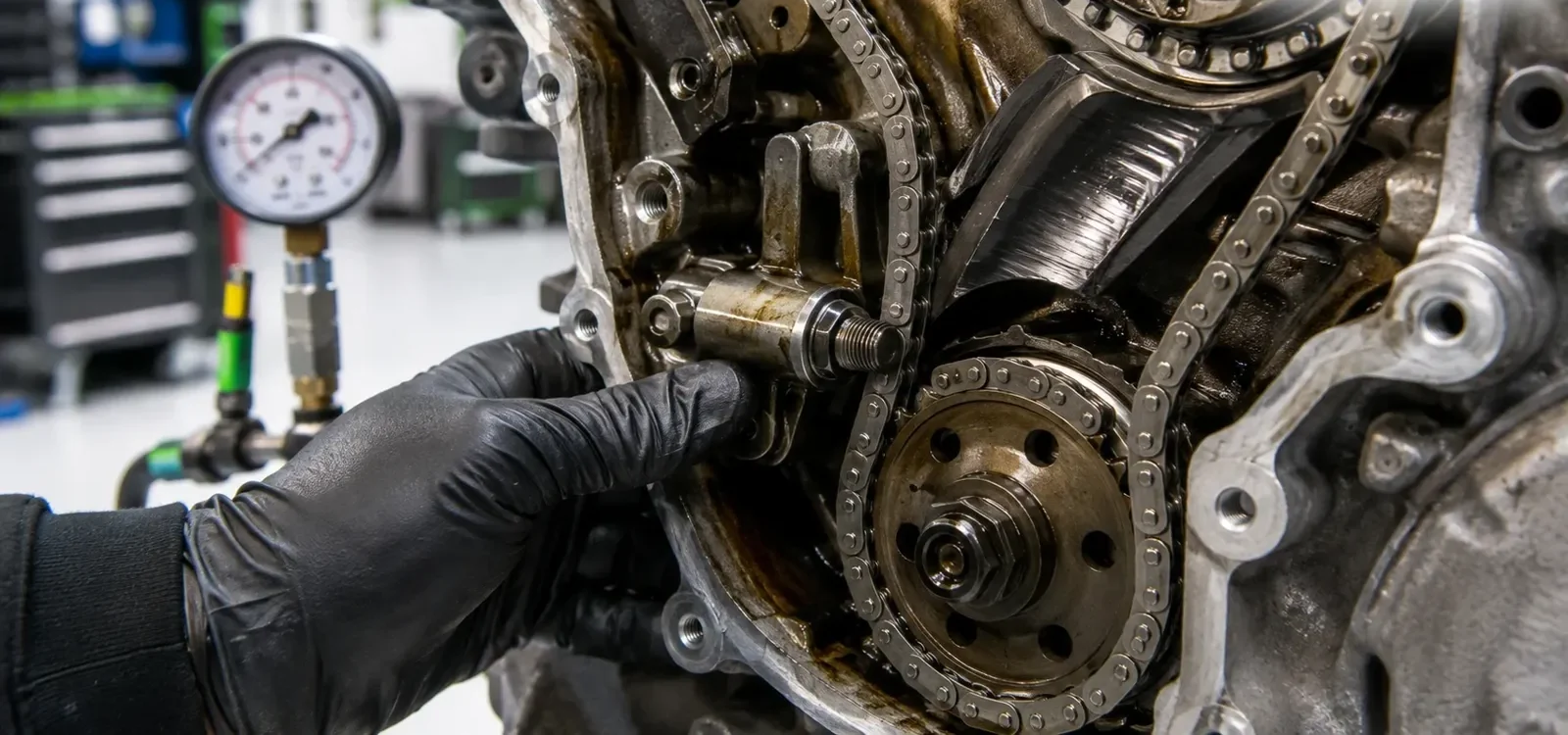
Technician diagnosing timing chain rattle on a Jaguar Land Rover engine
Critical

Timing chain stretch

What happens
A metallic rattle for a second or two on a cold start, then timing-related fault codes, restricted performance and, at worst, a chain that jumps or snaps.
Root cause
Wear in the chain, the plastic guides and the hydraulic tensioner. It is made worse by diluted or overdue oil. Revised parts arrived around 2019, so earlier engines are the ones we check first.
Our fix
Chain, guides, tensioner and sprockets replaced as a kit. If the chain has jumped, the head comes off for valve and piston inspection, and a full rebuild may be needed.
Prevention
Correct 0W-30 oil, shorter oil-change intervals on short-trip cars, and never ignoring a cold-start rattle.
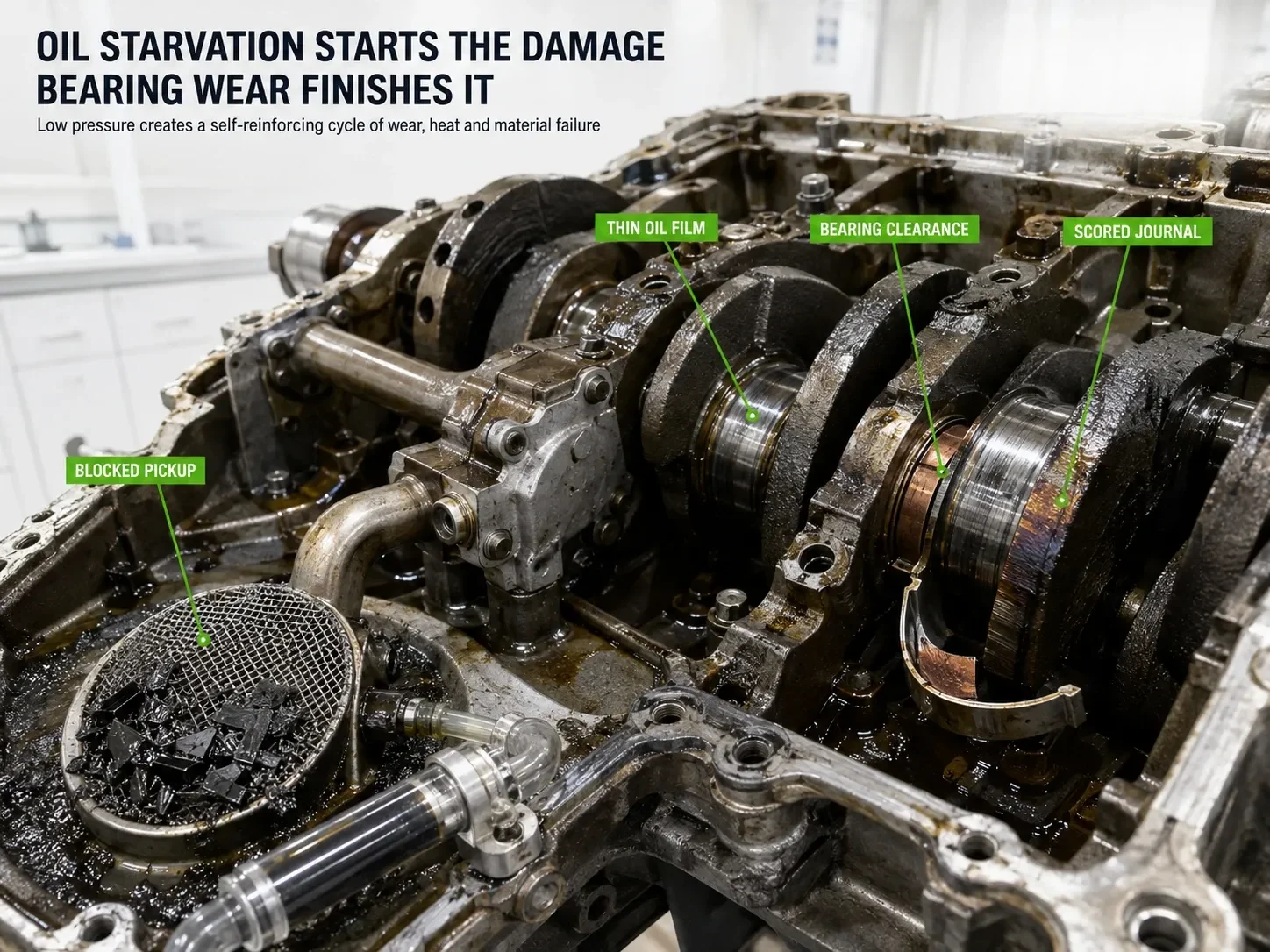
Ingenium crankshaft and bearings inspected during an engine strip-down
Critical

Crankshaft bearing failure

What happens
A deep knock from the bottom of the engine that rises with revs, an oil pressure warning, or metal in the oil at a service.
Root cause
Thin, fuel-diluted oil cannot hold the film the bearings need. Debris from worn timing guides can also partly block the oil pick-up and starve the bearings.
Our fix
Bottom-end rebuild: crank ground or replaced, new main and big-end bearings, oil pump and pick-up checked, and the oil cooler and passages flushed. Severe cases need a replacement engine.
Prevention
Treat a rising oil level as urgent, and stop driving at the first knock.
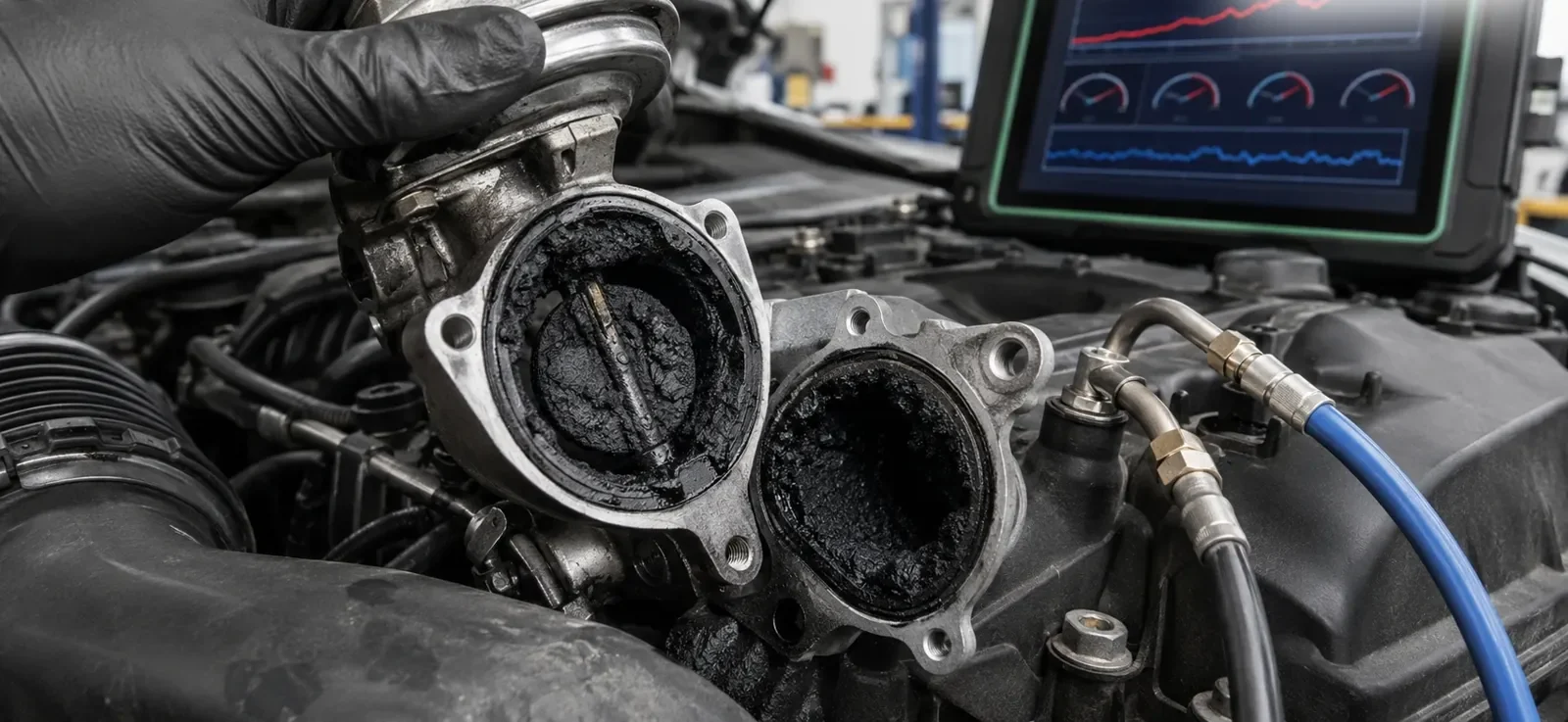
Diagnostic equipment connected to a diesel engine with EGR and limp-mode faults
High

Oil dilution & DPF problems

What happens
The oil level rises on the dipstick between services, the oil smells of diesel, DPF or oil-service messages appear, and the cooling fan runs after you park.
Root cause
Active DPF regeneration injects extra fuel late in the cycle. Short trips interrupt it, and the fuel washes past the rings into the sump.
Our fix
Oil and filter change with the correct spec, a check of DPF condition and regeneration history, and investigation of injector or sensor faults. The engine is inspected for chain and bearing wear if dilution has been heavy.
Prevention
Regular longer runs so regenerations can finish, and earlier oil changes on mainly urban cars.
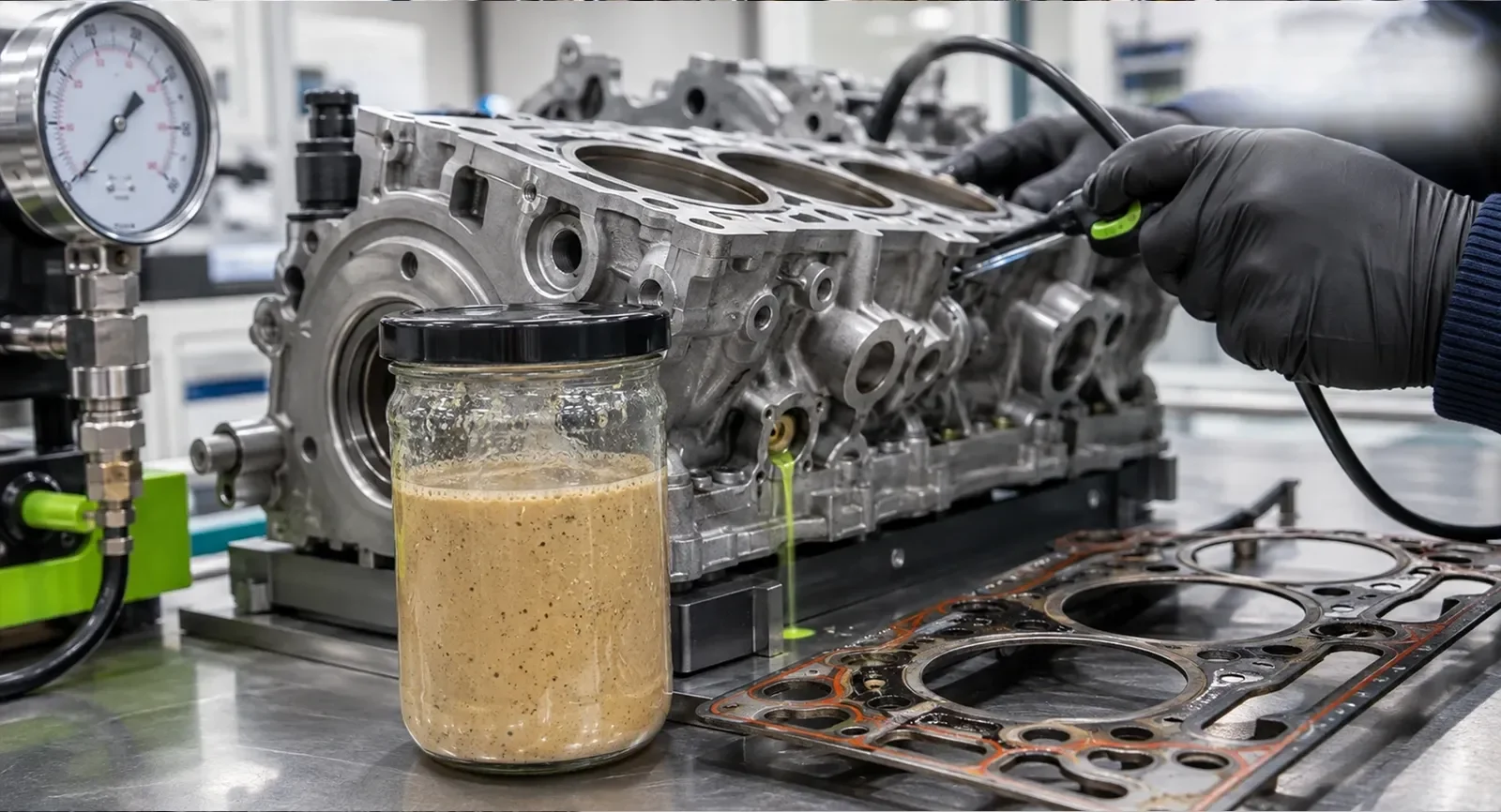
Cooling system pressure test equipment on an engine with coolant loss
High

EGR cooler & coolant loss

What happens
Coolant needs topping up with no visible leak, white smoke with a sweet smell, and EGR or low-coolant warnings.
Root cause
The EGR cooler can crack internally or soot up, letting coolant into the exhaust or intake side. Overheating from coolant loss can then damage the head gasket.
Our fix
Pressure and combustion-gas tests to find the source. The EGR cooler or valve is replaced, and the head is skimmed and pressure-tested if it has overheated.
Prevention
Watch the coolant level. Never keep driving with a low-coolant warning.
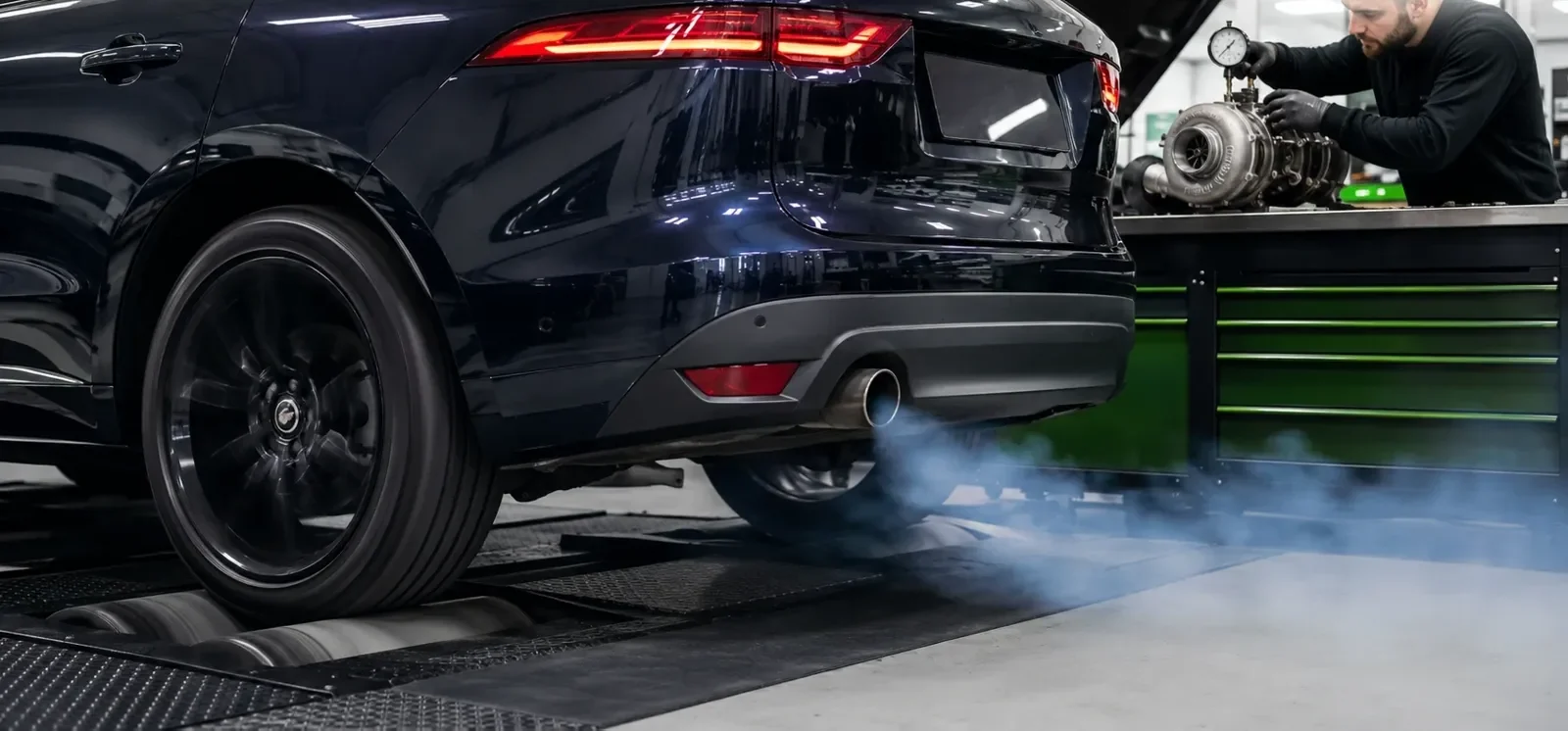
Exhaust smoke from a diesel SUV with a suspected turbocharger fault
High

Turbocharger failure

What happens
Whistle or siren noise, loss of power, blue smoke and oil in the intercooler pipes.
Root cause
Usually a symptom of poor oil supply or contamination: diluted oil, blocked feeds or debris after another failure.
Our fix
The turbo is replaced together with its oil feed and return lines. We find out why it failed first, otherwise a new turbo can fail the same way.
Prevention
Oil quality and change intervals, and an idle cool-down after hard driving.
Jaguar Land Rover engine stripped down in the workshop for inspection
Moderate

Injector & fuel system faults

What happens
Rough idle, misfire, hard starting, smoke, or fuel-dilution symptoms that keep coming back.
Root cause
Worn or leaking injectors, failed seals, or contamination of the high-pressure system.
Our fix
Injector testing and replacement with new seals and washers. The high-pressure pump and rail are checked if contamination is found.
Prevention
Quality fuel, a fuel filter changed on schedule, and early attention to misfires.

Symptoms and likely faults

What you noticeMost likely causeAlso checkUrgency
Rattle for 1–3 seconds on cold startTiming chain or tensioner wearOil level and conditionBook in soon
Knock from low down that rises with revsCrankshaft bearing wearOil pressure, debris in the sumpStop driving
Oil level above max, diesel smellOil dilution from DPF regenerationDPF soot load, injectorsChange oil now
Coolant loss, white sweet-smelling smokeEGR cooler leakHead gasket, overheatingStop driving
Blue smoke, whistle, low powerTurbo failureWhy the turbo lost oilBook in soon
Restricted performance plus timing codesChain stretch, cam/crank correlationSensors and wiringStop driving
Oil pressure warningLow oil, bearing wear, pick-up blockageOil pumpSwitch off now

More known faults, engine by engine: Land Rover, Range Rover and Jaguar engine problems.

Failure deep-dive

Ingenium timing chain and oil dilution: how one leads to the other

Most 2.0 Ingenium diesel failures are linked, so it helps to see them as a sequence:

  1. Short journeys. The DPF fills with soot faster than it can burn off on its own.
  2. Interrupted regenerations. The engine adds late fuel to heat the filter, but you arrive and switch off first. Some of that fuel ends up in the oil.
  3. Thinner oil. The oil level creeps up and viscosity drops. The hydraulic chain tensioner, the bearings and the turbo all rely on that oil.
  4. Chain and guide wear. The chain stretches, guides wear, and plastic debris can collect at the oil pick-up.
  5. Bottom-end or timing failure. A spun bearing or a jumped chain turns a repair into a rebuild.

Because the chain is at the flywheel end, Ingenium timing chain replacement is not a quick job. On most installations the engine and gearbox have to be separated to reach it. That makes it the right moment to inspect the bearings and fit a full timing kit, rather than just a chain.

There has been no UK recall for the Ingenium timing chain. You can check any outstanding recalls on your own car by registration with the GOV.UK vehicle recall checker. If a chain is caught early, while it is still rattling and before it jumps, a timing chain job is usually enough. Once there is metal in the oil or a bottom-end knock, a full engine rebuild is the safer route.

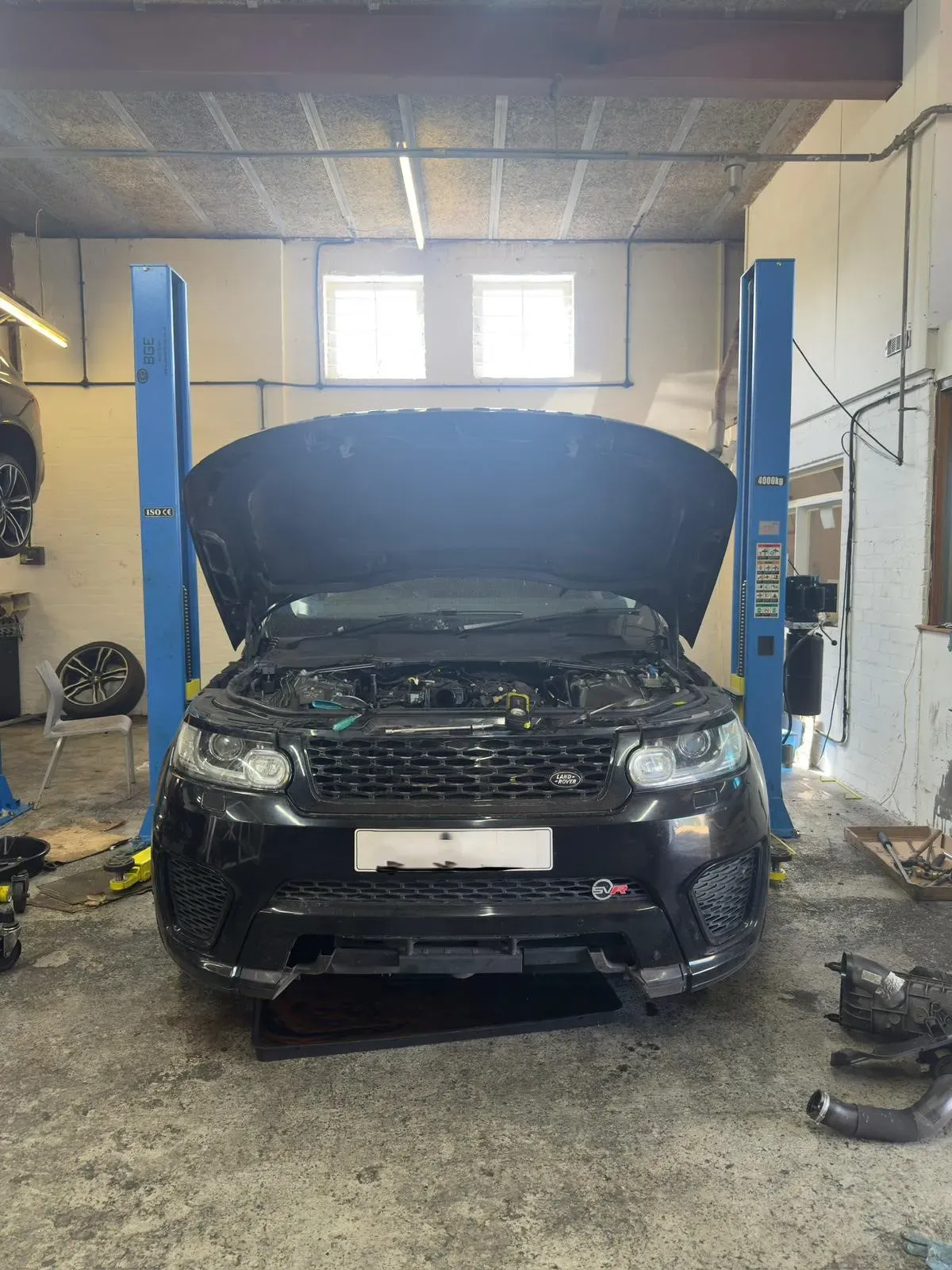
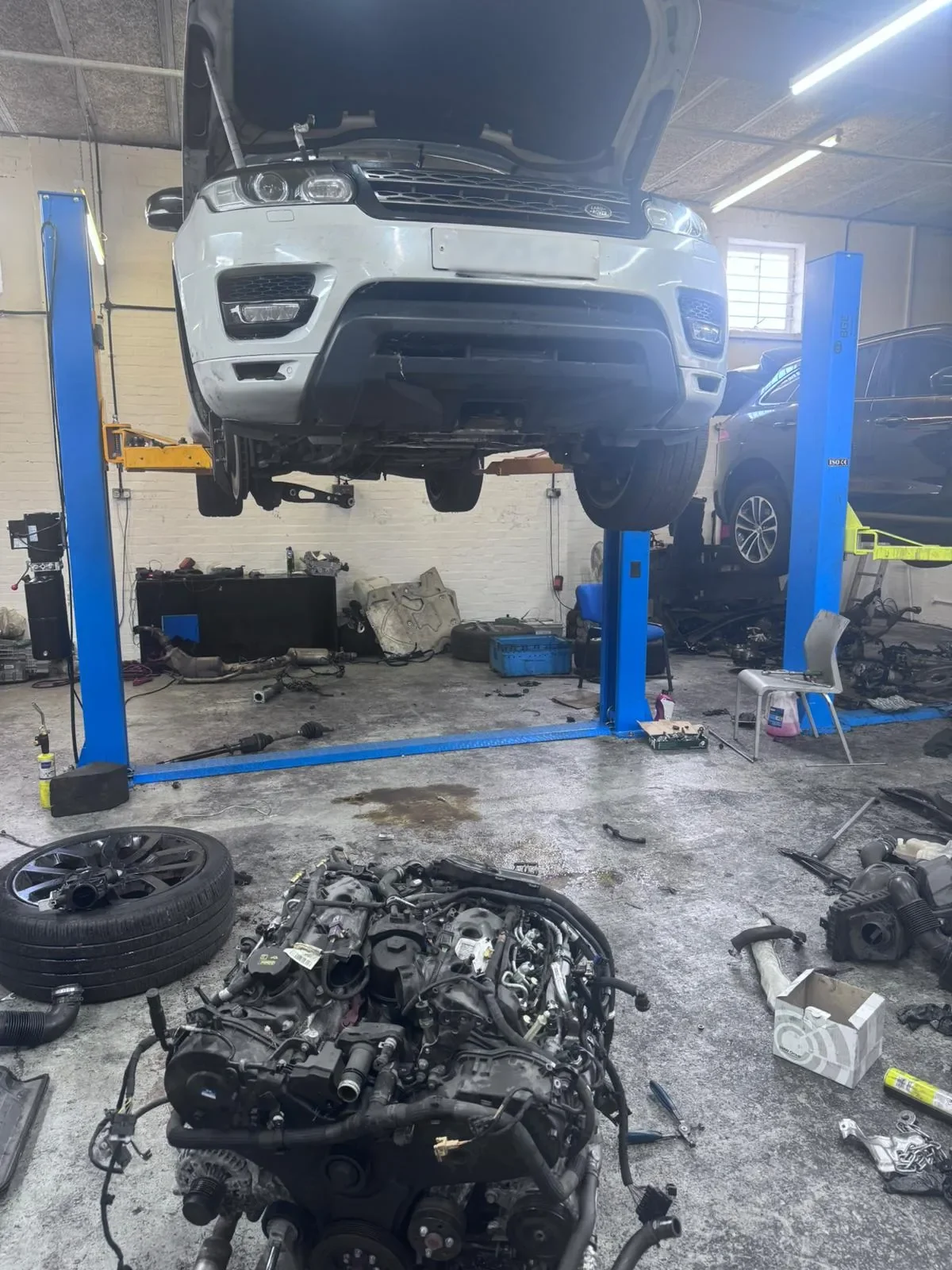
Range Rover Sport on a two-post lift with its engine removed for timing drive and bearing inspection
Engine out for timing-drive and bottom-end inspection at our partner workshop.
3.0 Ingenium engine problems

Looking for the six-cylinder Ingenium?

The 3.0 Ingenium I6 diesel (AJ20D6) and petrol (AJ20P6) share the family's modular design, but they have a different set of issues. Reported problems include EGR and DPF soot loading on short-trip diesels, turbo actuator faults, and a safety recall on the oil filter housing for some six-cylinder engines. Check yours by reg on GOV.UK. These are covered on their own pages so this page stays accurate for the 2.0.

3.0 I6 diesel (AJ20D6)3.0 I6 petrol (AJ20P6)
Warning signs

Warning signs on a 2.0 Ingenium diesel

  • Short rattle or chatter just after a cold start
  • Oil level above the maximum mark, or rising between services
  • Diesel smell on the dipstick, or an oil-dilution or service message
  • Knocking or tapping that rises with engine speed
  • White smoke with a sweet smell, or coolant needing regular top-ups
  • Blue smoke, a turbo whistle or sudden loss of power
  • Restricted performance or limp mode, engine management light
  • Frequent DPF regenerations: fan running after parking, a hot smell, worse economy
Stop driving if…

you hear a knock from the bottom of the engine, an oil pressure warning appears, or the temperature gauge climbs with coolant loss. Each extra mile can turn a repairable fault into a seized engine. Switch off safely and call us on 020 8089 1373. We can arrange collection of non-runners within our coverage area.

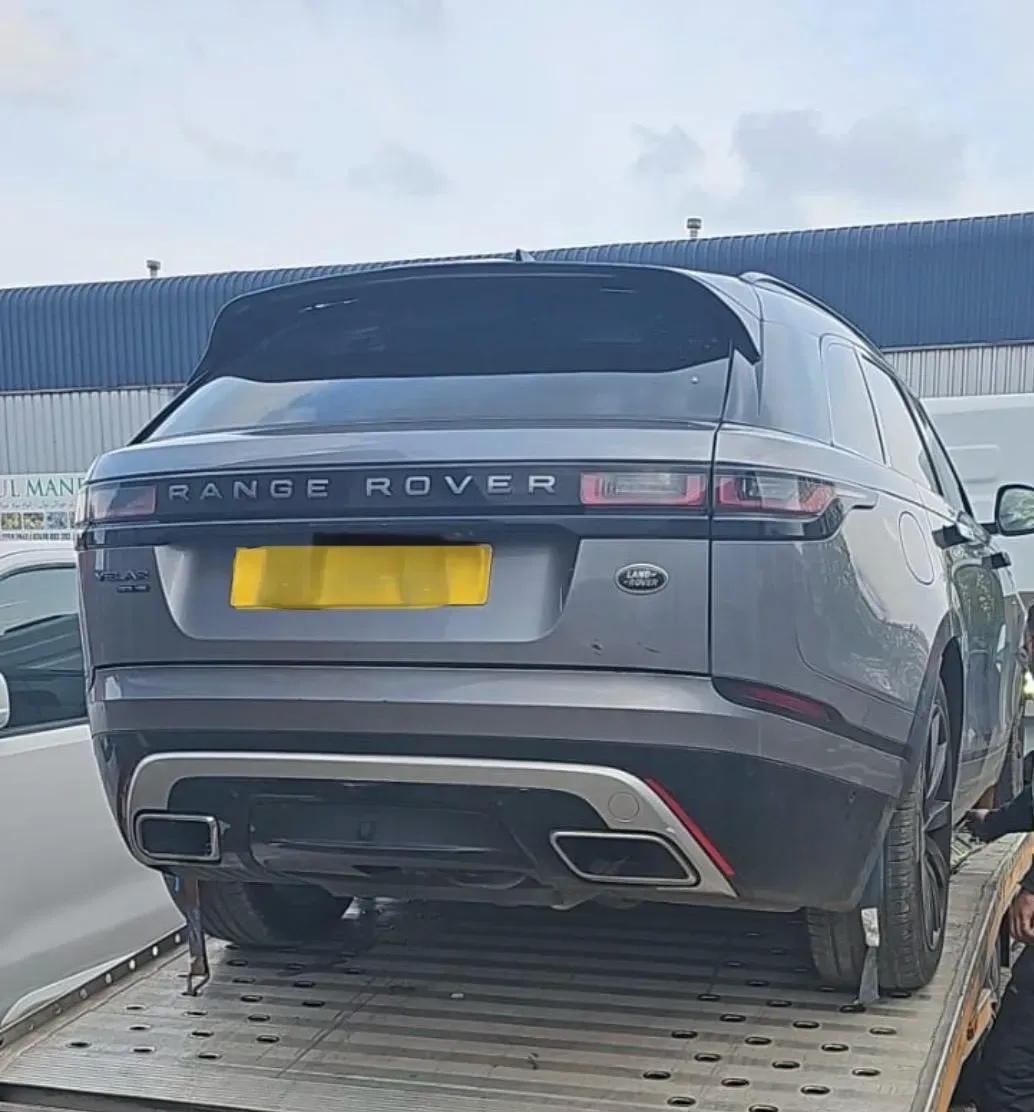
Range Rover Velar with a failed engine being collected on a recovery trailer
Your options

Repair, rebuild, reconditioned or used: which is right for your Ingenium?

There isn't one answer for every engine. Diagnosis decides it, and we explain the options before any work starts.

Targeted repairRebuild your engineReconditioned exchangeUsed replacement
What's doneTiming kit, EGR cooler or turbo onlyYour engine stripped, machined and rebuilt with new partsA rebuilt Ingenium unit fitted in place of yoursA checked, lower-mileage used engine
Best forEarly chain rattle, a single failed partBearing failure or a jumped chain with a sound blockBadly damaged block or crank, or less downtimeOlder or higher-mileage cars on a tighter budget
WarrantyOn the work done6 months unlimited miles, or 12 months / 12,000 milesConfirmed with your quote
DowntimeShortestLongest (machining time)Short to mediumShort to medium
RiskOther worn parts are left in placeLow: known history and partsLowHigher: unknown history
Relative costLowerMidMid to higherLower to mid

For your 2.0 Ingenium diesel, we offer 2.0 Ingenium diesel engine repair for faults caught early, a full 2.0 Ingenium diesel engine rebuild, reconditioned engines and used replacement engines, fitted through our engine supply and fit service. Not sure which? Start with engine diagnosis. We also carry out 2.0 Ingenium diesel timing chain replacement, DPF and EGR repair, head gasket repair, and collection and delivery of non-runners. See all engine services.

How we rebuild it

Our 7-step Ingenium rebuild process

The same process every time, with the checks that matter on a 2.0 Ingenium added at each stage.

  1. Diagnosis

    Fault codes, oil and coolant checks, compression and borescope inspection to find the cause.

    Ingenium: Oil sample checked for fuel dilution and metal.
  2. Removal & strip-down

    The engine is removed and fully dismantled, with every part labelled.

    Ingenium: Timing drive at the rear: chain stretch is measured.
  3. Cleaning & crack testing

    Block, head and crank are cleaned, crack-tested and pressure-tested.

    Ingenium: Oil pick-up and passages cleared of guide debris.
  4. Machining

    Hone or re-bore, head skim and seat cutting, crank grind to the measured wear.

    Ingenium: Bearing journals measured against spec.
  5. New parts fitted

    Rings, bearings, gaskets, a full timing kit and filters, plus anything worn found at inspection.

    Ingenium: Complete chain, guide and tensioner kit.
  6. Assembly & testing

    Built to torque specification, primed, then run and checked for leaks.

    Ingenium: Timing set and locked with the correct tools.
  7. Refit, coding & road test

    Refitted, coded with diagnostic equipment, road-tested and handed back with your warranty.

    Ingenium: Adaptations, DPF and MHEV checks completed.

From your first call to handback, see how it works.

What's included

What's included in a 2.0 Ingenium diesel rebuild

This is our standard full-rebuild scope. Some parts are always replaced. Others are measured and only replaced if they are worn, and we tell you which before we fit them. For a 2.0 Ingenium, the timing kit is the full chain set with its guides and tensioner.

Always changed

Main parts

  • Piston rings (new set)
  • Main bearings + big end bearings (crank bearings), new set
  • Thrust washers
  • Full gasket kit: head gasket, sump gasket, valve cover gasket, manifold gaskets, oil seals
  • Timing kit: timing belt/chain, tensioner, guides, pulleys
  • Oil filter, air filter, fuel filter
Checked, changed if worn

Pistons / valves

  • Pistons: new if bore worn / oversize pistons (0.25 / 0.50)
  • Piston pins + clips
  • Valves: intake + exhaust
  • Valve guides + valve seals
  • Valve springs
Done to the measured wear

Machining / service

  • Crankshaft: grinding/polishing (0.10 / 0.25 undersize)
  • Cylinder head: facing/skimming, valve seat cutting
  • Cylinder block: re-boring/honing
  • Camshaft: re-grind if worn
Fitted on reassembly

Fluids + small items

  • New engine oil
  • Coolant/antifreeze
  • Spark plugs (petrol) / glow plugs (diesel)
  • Injector seals/washers (diesel)
  • Engine mounts if cracked

Prices are not shown because every engine is quoted after its code and damage are confirmed. See "What affects the quote" below.

Compatibility

Can I fit a different Ingenium engine to my car?

Sometimes, but it is not a simple plug-in swap. The 204DTD, 204DTA and 204DTY share the same basic block and bore dimensions. The turbo system, injectors, wiring, emissions hardware and ECU calibration are different, and MHEV cars add the belt-integrated starter-generator and 48-volt hardware.

  • Like for like: a 204DTD for a 204DTD of the same output and era is the simplest swap, with coding.
  • Across outputs: fitting a 240 PS twin-turbo engine to a 180 PS car is not a straight swap. It needs different ancillaries and calibration, and usually isn't worthwhile.
  • Across eras: early (2015–2019) and MHEV/204DTY engines are not interchangeable without major changes.
  • Transverse vs longitudinal: Evoque, Discovery Sport and E-Pace mount the engine sideways. Velar, F-Pace, XE, XF, Discovery and Range Rover Sport mount it lengthways. Ancillaries and sumps differ.

Whichever route you choose, the replacement unit is coded to the car with diagnostic equipment, and we confirm compatibility against your VIN first.

Oil & aftercare

How to protect a rebuilt Ingenium

  • Use SAE 0W-30 oil meeting JLR STJLR.03.5007, the specification named in UK handbooks for this engine.
  • Shorten the oil-change interval if most of your driving is short or urban. Don't reset an early oil-service message without changing the oil.
  • Give the car a steady run of 20 minutes or more at motorway or A-road speed regularly, so DPF regenerations can finish.
  • Check the dipstick or level display monthly. A rising level is an early warning, not a bonus.
  • Get any cold-start rattle checked straight away. Never drive through an oil pressure or coolant warning.
  • Keep AdBlue topped up and fix EGR or DPF fault codes promptly.
Cost of an Ingenium rebuild

What affects the quote for a 2.0 Ingenium rebuild or replacement?

We don't publish a fixed price, because two engines with the same badge can need very different work. These are the things that move the figure. Send your reg and a description of the fault, and we'll give you a written quote for your car.

Get my quote

Engine code & output

204DTD, 204DTA twin-turbo or 204DTY MHEV, and transverse or longitudinal fitment.

Extent of damage

A timing kit only, versus bearings, crank or a damaged head after a jumped chain.

Turbo, injectors & DPF

Whether these were damaged by contaminated oil and need replacing too.

Rebuild vs exchange vs used

Your own engine rebuilt, a reconditioned unit, or a checked used engine.

Supply only or supply & fit

Engine only, or removal, fitting, coding and road test.

Collection & distance

Whether the car drives in or needs collection as a non-runner.

How we can help

Rebuild, supply & fit, or supply only

Rebuild your engine

We remove, strip, machine and rebuild your own 2.0 Ingenium, then refit, code and road-test it. About our engine rebuilds.

Supply & fit

A reconditioned or checked replacement Ingenium matched to your VIN, fitted in our workshop. Supply and fit details.

Collection & supply only

We can collect within about 100 miles of Rainham or Peterborough, non-runners included. Supply-only engines are available for your own garage to fit. Collection and delivery.

Warranty option 16 months, unlimited miles

Ideal if you cover high mileage soon after the work.

Warranty option 212 months / 12,000 miles

Longer cover for typical annual mileage. Warranty details.

From the workshop

Real engines, real workshop

Photos from our partner workshop of JLR engines being removed, stripped and rebuilt.

Range Rover Evoque on a lift with the engine and subframe lowered out
Evoque engine and subframe lowered out
Jaguar Land Rover diesel engine part dismantled on the workshop floor
Strip-down and inspection
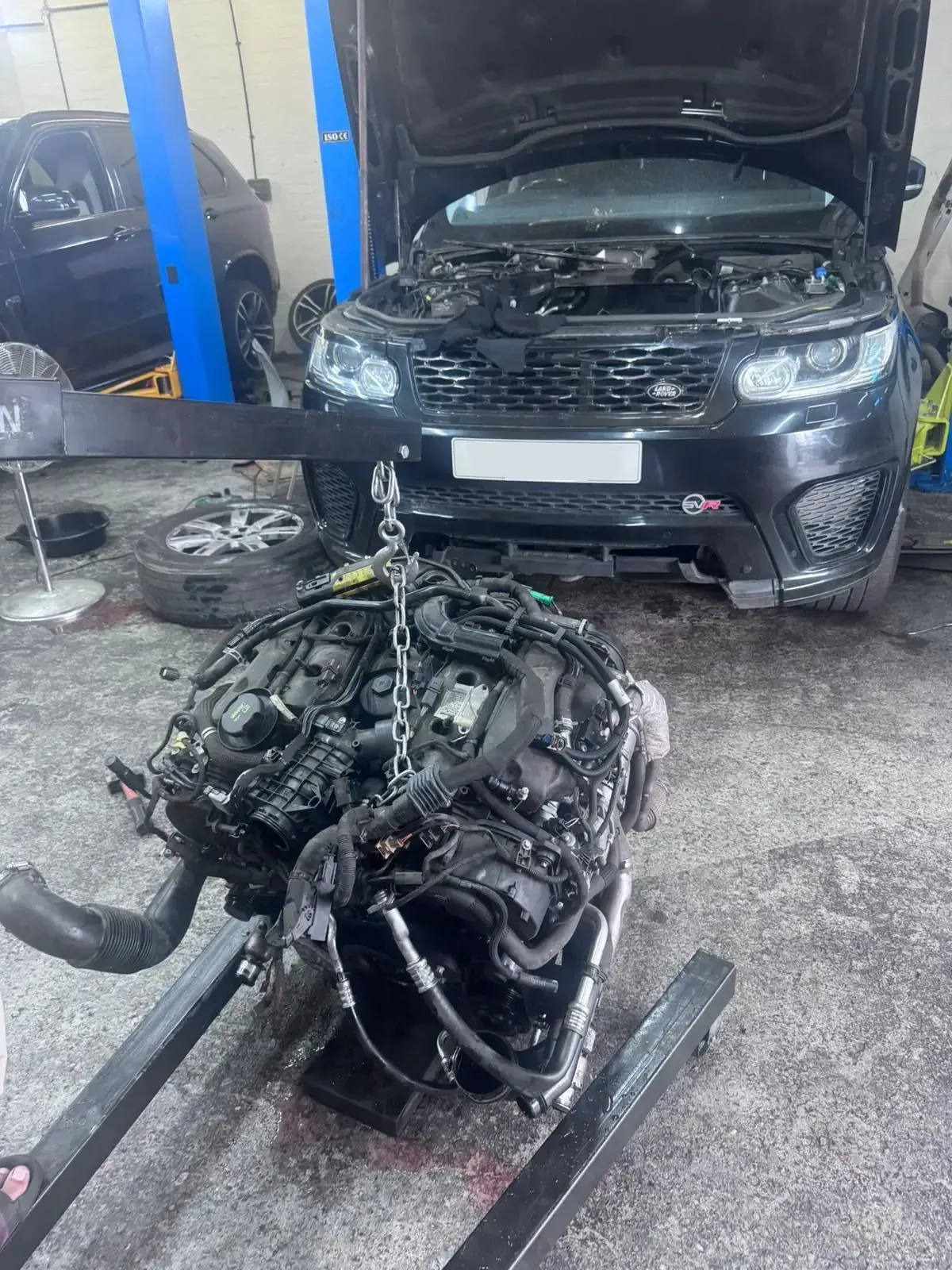
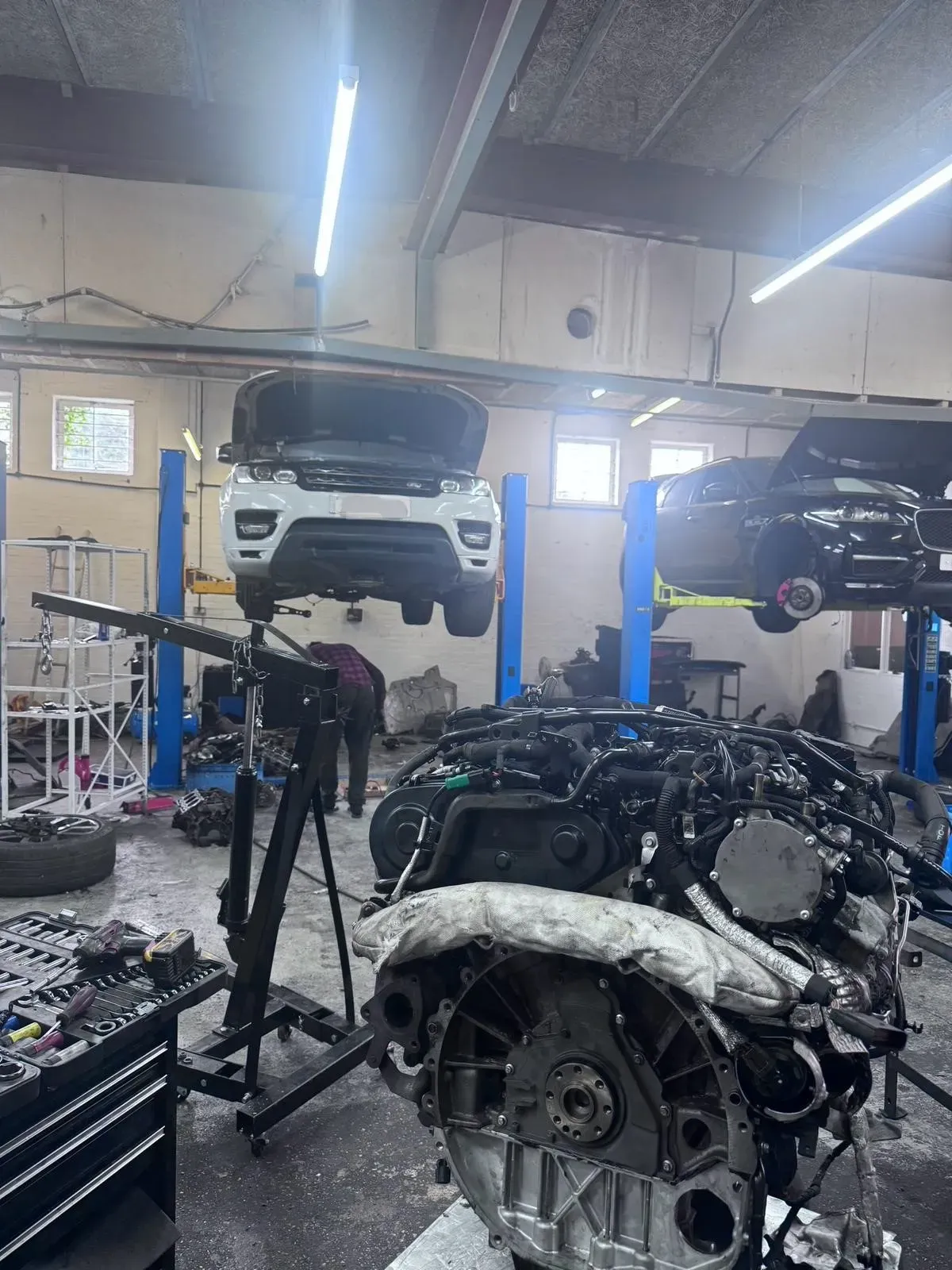
Range Rover Sport on a workshop lift with the engine removed and on a stand
Engines out, cars on lifts
Range Rover Sport on a lift with its engine stripped on the workshop floor
Range Rover Sport engine strip-down
Areas we cover

Ingenium rebuilds from Rainham and Peterborough

Two partner workshops, each covering about 100 miles, so most of London, the South East and the East of England is within reach.

Rainham workshop

Unit 1 Fordview Industrial Estate, Rainham RM13 8ET. Serves London, Essex, Kent, Hertfordshire and Surrey. Rainham workshop.

Peterborough workshop

Serves Cambridgeshire, Lincolnshire, Northamptonshire and the East Midlands. Peterborough workshop.

FAQs

Ingenium 2.0 diesel questions

What is the Ingenium engine?
Ingenium is Jaguar Land Rover's own family of modular engines, built at its Engine Manufacturing Centre near Wolverhampton since 2015. It includes a 1.5 three-cylinder petrol, 2.0 four-cylinder diesel and petrol, and 3.0 six-cylinder diesel and petrol. The 2.0 diesel (204DTD/204DTA, later 204DTY) is fitted to the Evoque, Discovery Sport, Velar, Discovery 5, F-Pace, E-Pace, XE and XF.
Which 2.0 Ingenium diesel faults do you repair?
Timing chain stretch, oil dilution from interrupted DPF regenerations, crankshaft bearing failure linked to diluted oil, EGR cooler leaks and turbo failure. Many of these are connected: diluted oil speeds up chain, bearing and turbo wear. Revised parts arrived around 2019, so earlier engines are the ones we check first. Buying one? Our guide to Ingenium engine problems and which versions to avoid compares the diesel, petrol and six-cylinder engines.
What is the difference between the 204DTD and 204DTA?
Both are 2.0 Ingenium diesels with the same bore and stroke. The 204DTD has a single variable-geometry turbo and produces 150–180 PS (163 PS in some Jaguars). The 204DTA has a two-stage sequential twin-turbo set-up and produces 240 PS and 500 Nm, badged SD4, D240 or 25d. The later 204DTY is the Euro 6d engine used for the D165 and D200.
What are the signs of Ingenium timing chain failure?
A metallic rattle for a second or two after a cold start is the classic early sign. Later you may get timing or camshaft-correlation fault codes, restricted performance or a rough run. If the chain jumps or snaps, the engine stops and the valves and pistons can be damaged, so get a rattle checked early. There is more detail in our guide to Discovery Sport and Evoque timing chain problems.
Why is the oil level rising on my 2.0 Ingenium diesel?
It is almost always diesel getting into the oil during DPF regenerations that don't finish, usually because of short journeys. A rising level and a diesel smell on the dipstick mean the oil has thinned. Change the oil and filter with the correct specification and get the cause checked, because thin oil wears the chain, bearings and turbo.
Can the Ingenium timing chain be replaced without removing the engine?
The 2.0 Ingenium's timing chain sits at the rear of the engine, at the gearbox end. On most installations the engine and gearbox have to be separated to reach it, which is why the job takes longer than on a front-chain engine. We use that access to inspect the bearings and fit a full kit with guides and tensioner.
What causes 2.0 Ingenium turbo failure?
A turbo usually fails because of what reaches it: thin, diluted or contaminated oil, a restricted oil feed, or debris after another failure. Replacing the turbo without fixing the cause risks a repeat, so we check oil condition and the feed and return lines and replace them with the turbo.
How much does an Ingenium engine rebuild cost?
We don't publish a fixed price, because the work depends on the engine code, how much damage there is (timing only or bottom end), whether the turbo or injectors are affected, and whether you choose a rebuild, a reconditioned unit or a used engine. Send your reg and the symptoms, and we'll give you a written quote matched to your car.
Is the Jaguar Ingenium engine the same as the Land Rover one?
Yes. The 2.0 Ingenium diesel in a Jaguar XE, XF, E-Pace or F-Pace is the same engine family as in a Discovery Sport, Evoque or Velar. Jaguar catalogues often use AJ codes such as AJ200D. Fitments, ancillaries and calibration differ by model, so we confirm by VIN.
What warranty do you give on an Ingenium rebuild?
You choose between 6 months with unlimited miles or 12 months / 12,000 miles. Both options are explained on our warranty page and confirmed in writing with your quote.
Do you have problems with the 3.0 Ingenium engine too?
Yes, we work on the six-cylinder Ingenium diesel (AJ20D6) and petrol (AJ20P6) as well. Their issues are different from the 2.0, so they are covered on their own engine pages.
Can you collect my car if the engine has failed?
Yes. We can arrange collection within about 100 miles of our Rainham and Peterborough workshops, including non-runners. Tell us where the car is when you ask for a quote.

More answers on our engine FAQs page, plus warranty and how it works.

Free, no-obligation quote

Get a quote for your Ingenium engine

Send your reg and a quick description of the fault. We confirm whether it's a 204DTD, 204DTA or 204DTY, explain your options and send a written quote.

  1. Your vehicle
  2. Fault and service
  3. Your details

Your vehicle

Fault and service

Any other symptoms? (optional)
Does the vehicle still drive?
Do you need collection?

Your details

We use your details only to reply to this enquiry.

CallWhatsAppGet a quote