3.6 TDV8 specialists · Range Rover L322 & Sport L320
3.6 TDV8 (368DT) Engine Rebuild & Replacement
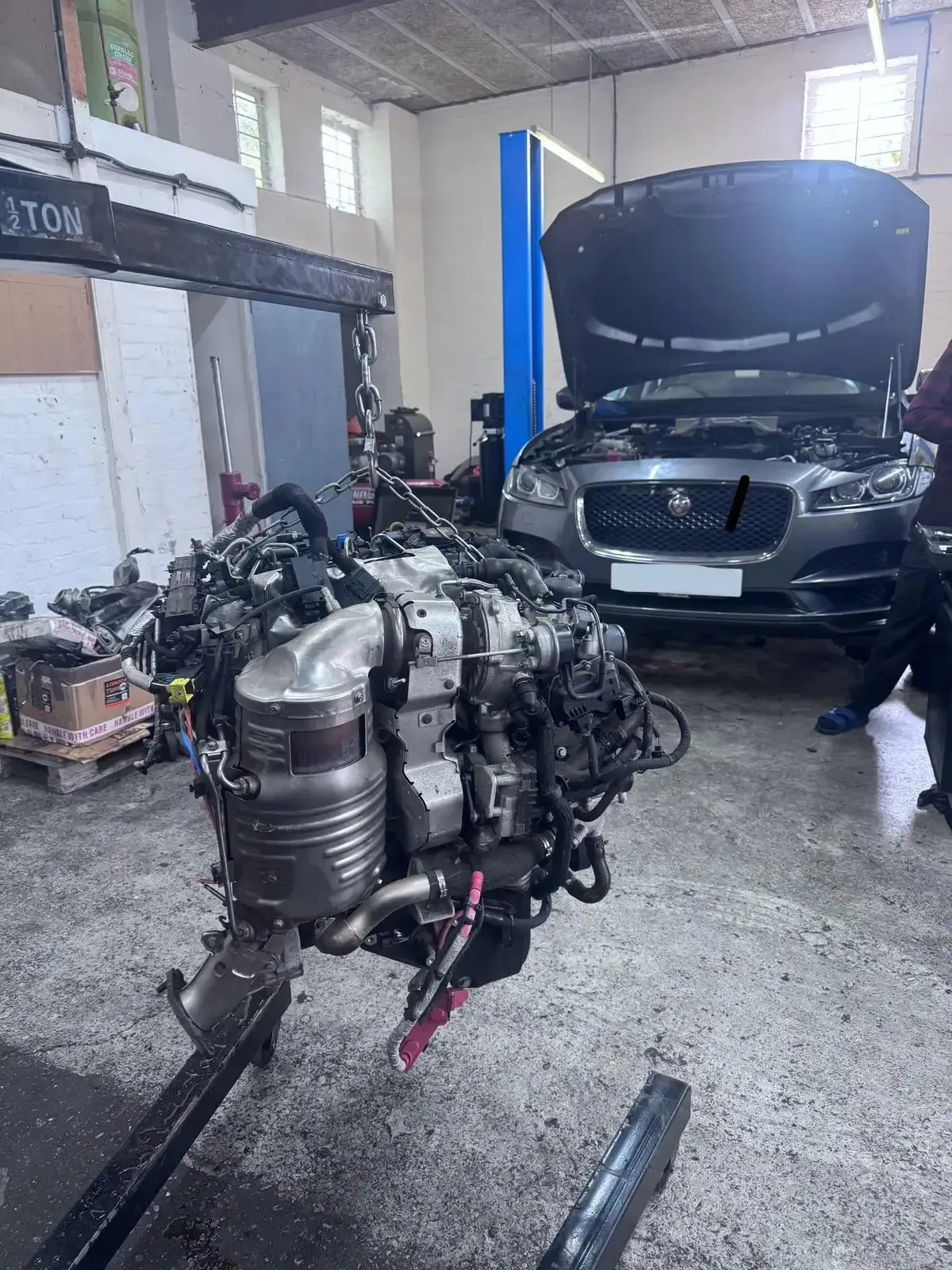
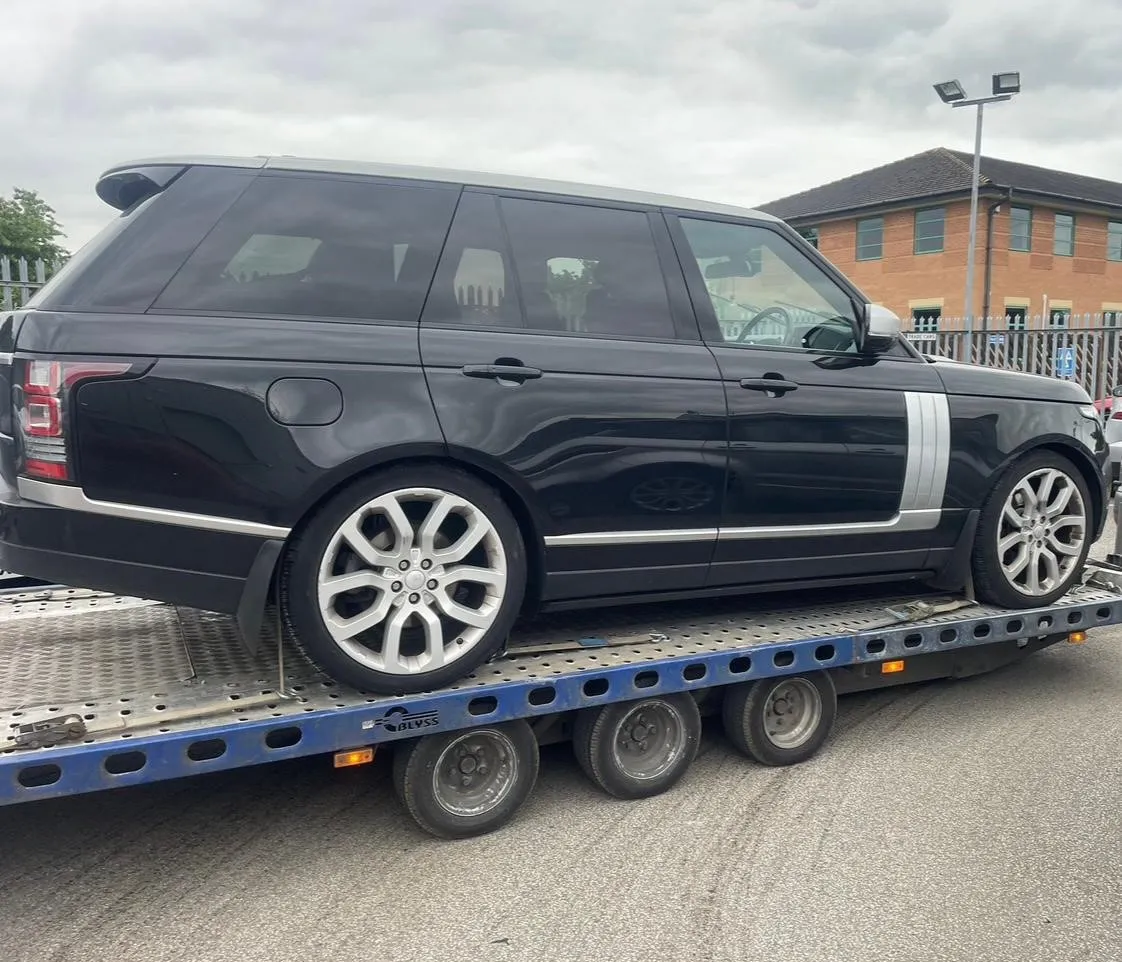
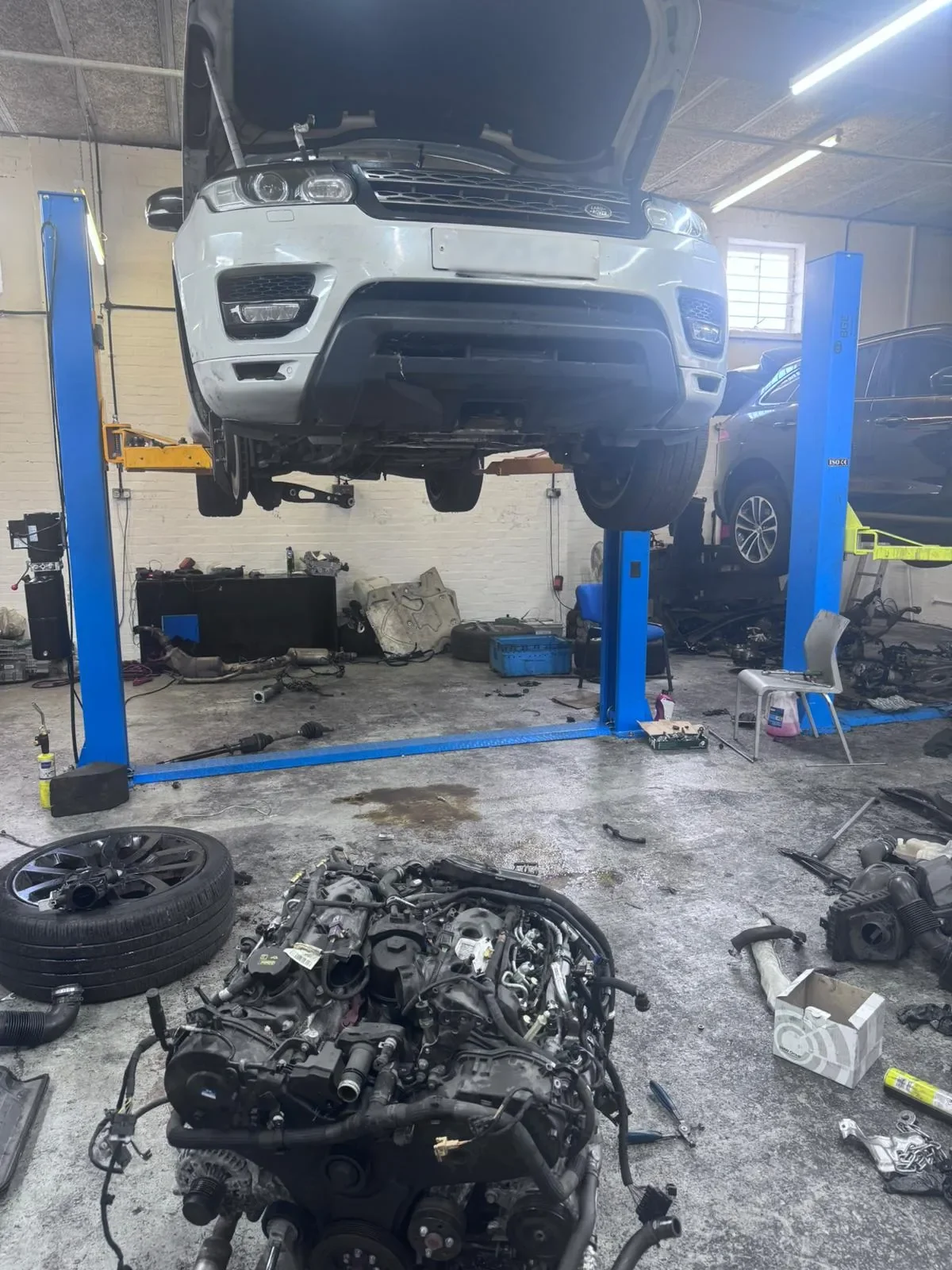
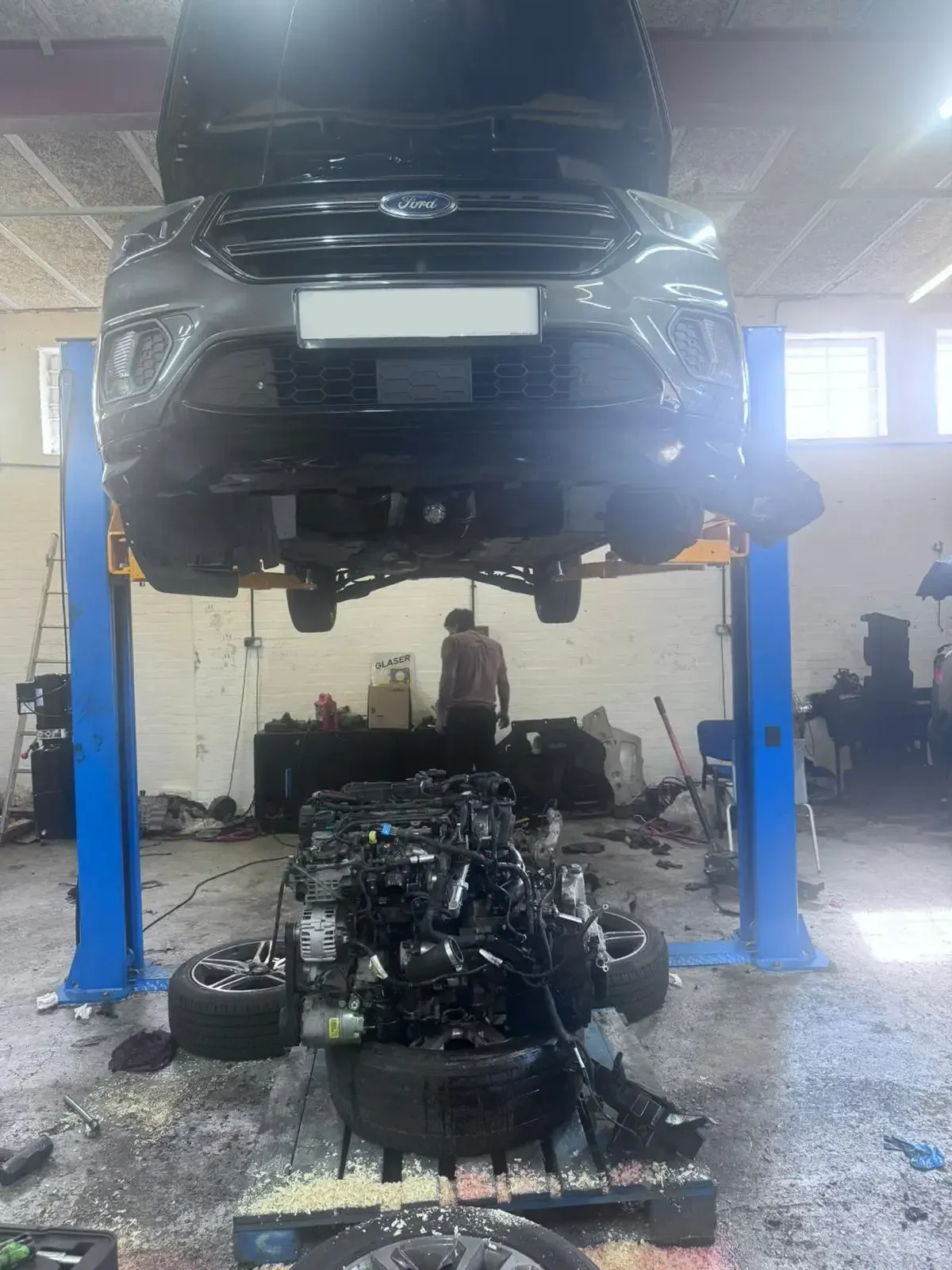
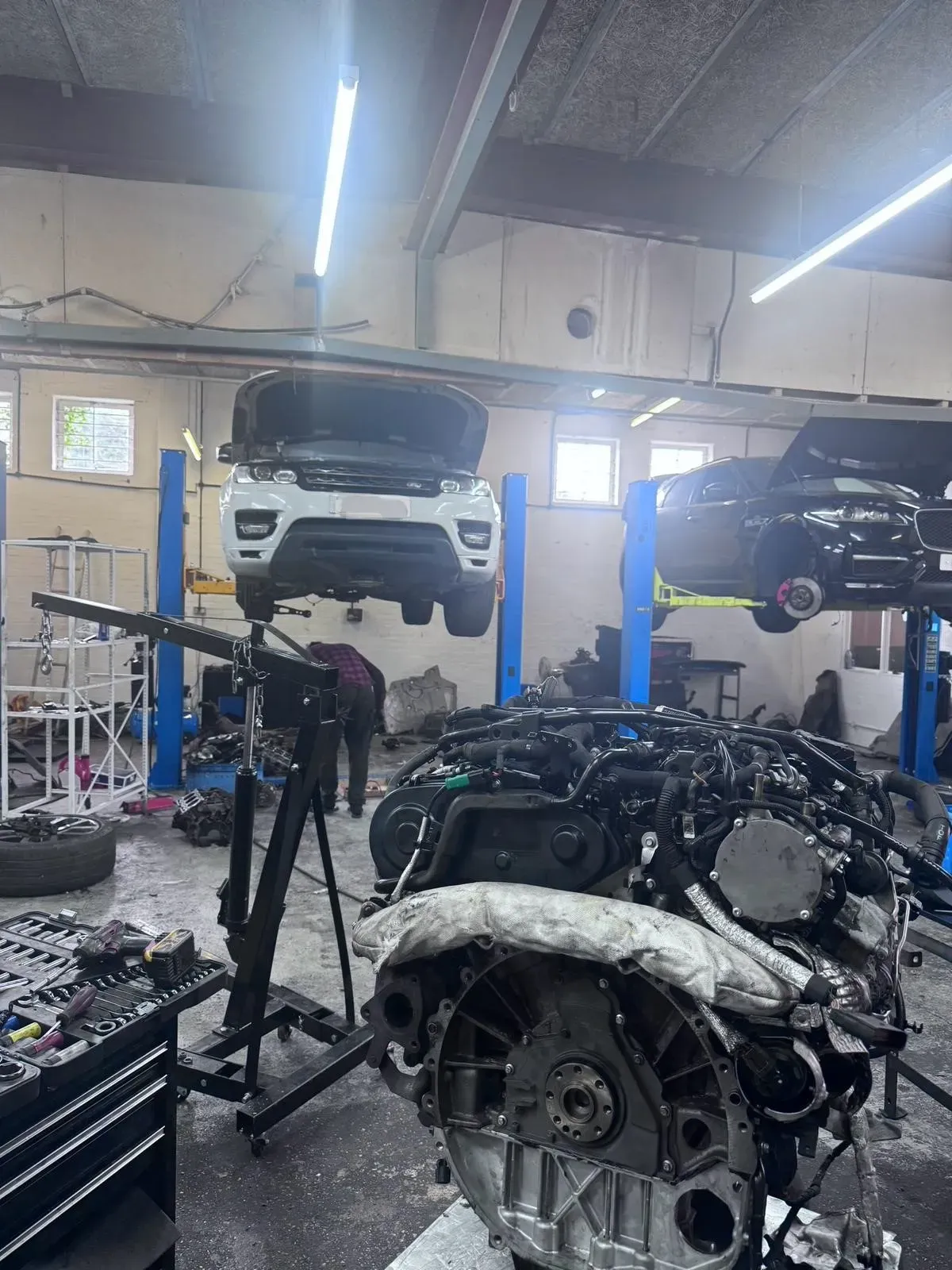
The 368DT is the 3.6-litre twin-turbo V8 diesel badged TDV8 in the Range Rover L322 and the first Range Rover Sport (L320). It is the engine most early V8 diesel Range Rovers still run on, and turbo trouble is the usual reason it comes to us. We repair it, rebuild it, or fit a reconditioned or checked used 368DT.
ModelsRange Rover L322 to 2010, Sport L320 to 2011 MY
TDV8 in limp mode?It is often a hose or actuator. Send your reg before you buy a turbo.
Overview & history
The 3.6 TDV8 explained
The 3.6 TDV8 was Land Rover's first V8 diesel. It came from the same Ford "Lion" project as the 2.7 and 3.0 V6 diesels, but with eight cylinders on a 90-degree compacted graphite iron block, aluminium four-valve heads, piezo injectors and a pair of variable-geometry turbos. Wikipedia records production at Ford's Dagenham diesel centre from April 2006.
It replaced the BMW six-cylinder diesel in the Range Rover L322 for the 2007 model year and arrived in the Range Rover Sport L320 at about the same time. In the L322 it ran until the 4.4 TDV8 took over for the 2011 model year. In the Sport it stayed through the 2010 facelift and is not listed in JLR's 2012 model-year Sport data, where the 3.0 V6 diesels take over.
Unlike the V6 diesels in the same cars, the TDV8 drives its camshafts by chain rather than belts, and there is no chain change in the service schedule. The failures that bring it in are mostly around the turbos, the manifolds and the oil supply that keeps both alive. If a 368DT in an L322 or Sport L320 has gone beyond a turbo repair, the answer is one of our Range Rover engine rebuilds.
Technical data
3.6 TDV8 (368DT) specification
Sourced from JLR data sheets, cross-checked.
Item
368DT 3.6 V8 diesel
Displacement
3,628 cc (JLR); 3,630 cc in some references
Bore × stroke
81.0 × 88.0 mm
Layout
90° V8, 32 valves, four overhead camshafts
Compression ratio
17.3:1
Aspiration
Twin variable-geometry turbochargers
Block
Compacted graphite iron
Camshaft drive
Chains
Power
272 PS (Range Rover Sport 2010 MY sheet); 271 PS (Range Rover 2010 MY sheet)
Sources: JLR 2010 model-year data sheets for the Range Rover and Range Rover Sport; Wikipedia (Ford AJD-V6/PSA DT17, Lion V8) for the block, heads, injectors and build plant. The two JLR sheets give slightly different outputs, so both are shown. Oil grade and capacity come from your handbook.
Power outputs & badges
Which cars have the 3.6 TDV8?
The TDV8 badge was used for two different V8 diesels. The 3.6 is the earlier one; a Range Rover from the 2011 model year badged TDV8 has the 4.4 instead. The table lists the cars we cover with the 3.6.
If it says TDV8 and it is a Range Rover Sport, it is a 3.6. On the full-size Range Rover the model year decides it. The VIN on your V5C (section E) settles it.
The 3.6 and 4.4 share a family name but not parts: different capacity, turbos, engine management and gearbox. Ordering by badge alone is how the wrong engine gets bought.
If your car is…
It is most likely
Range Rover L322 TDV8, 2010 MY
368DT 3.6
Range Rover L322 TDV8, 2011–2012 MY
4.4 TDV8, not this engine
Range Rover Sport L320 TDV8, 2010–2011 MY
368DT 3.6
Range Rover Sport TDV6 or SDV6
3.0 V6 diesel (306DT)
Discovery 4
No V8 diesel was fitted
3.6 TDV8 engine problems
3.6 TDV8 engine problems: the faults we see
These are the faults owners describe and that we check for on a 368DT. They are often connected: a leaking hose can make a turbo work harder, and a starved turbo can send debris into the oil.
High
TDV8 turbo & actuator faults
3.6 and 4.4 TDV8 diesel
Symptoms
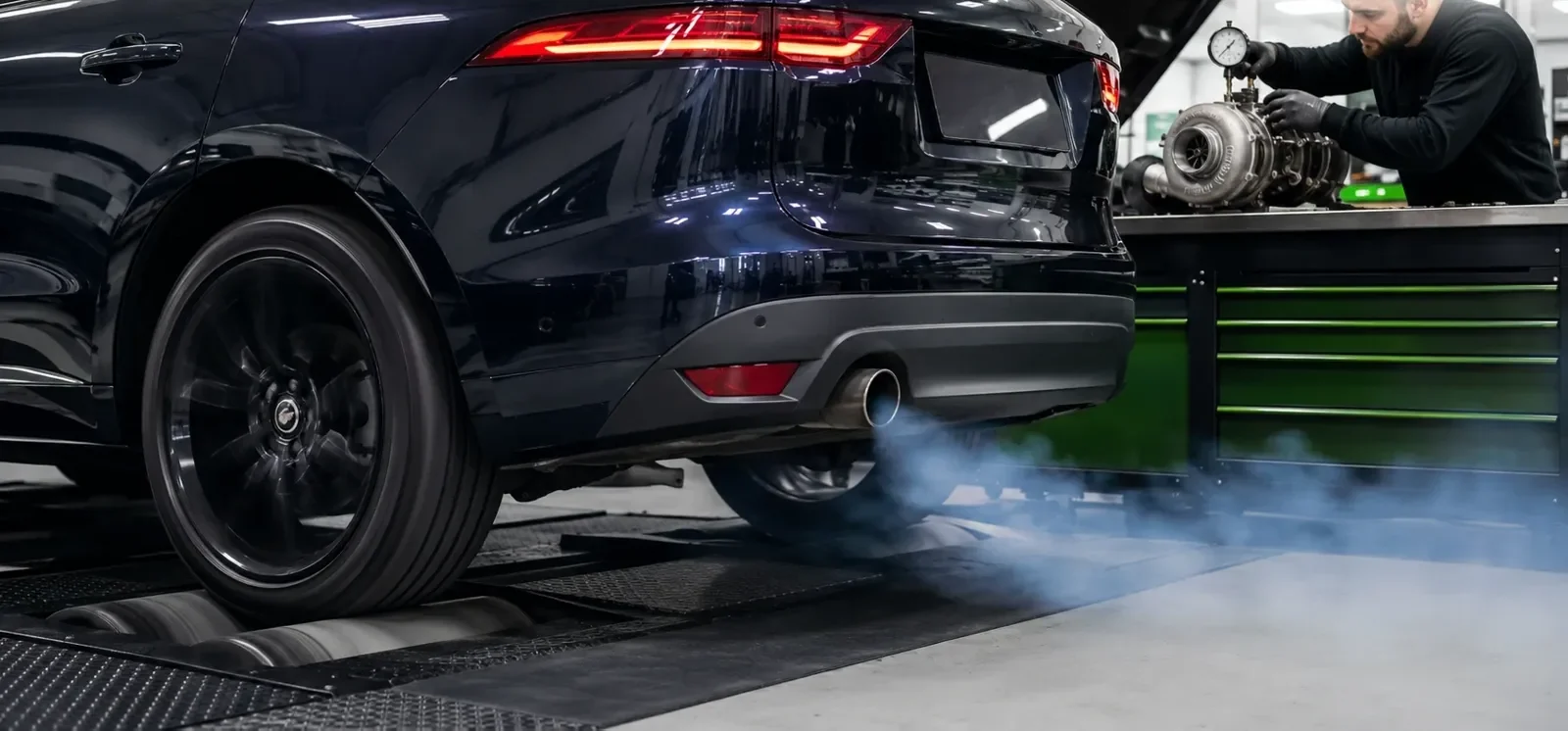
Limp mode with boost codes, a whistle that comes and goes, smoke under load, or a sudden drop in power on a motorway climb.
Cause
Owners' forums for the L320 and L322 report turbo failures on the 3.6 TDV8 more often than on most JLR diesels, usually traced to oil supply, split intercooler or turbo hoses, or debris. Sticking vane actuators cause limp mode without the turbo itself being worn.
Our fix
Smoke and boost tests first, so a split hose or a sticking actuator is not mistaken for a failed turbo. Where a turbo has failed we replace its oil feed and return pipes and find out why it starved.
On this model
The fault most often discussed on L320 and L322 owner forums.
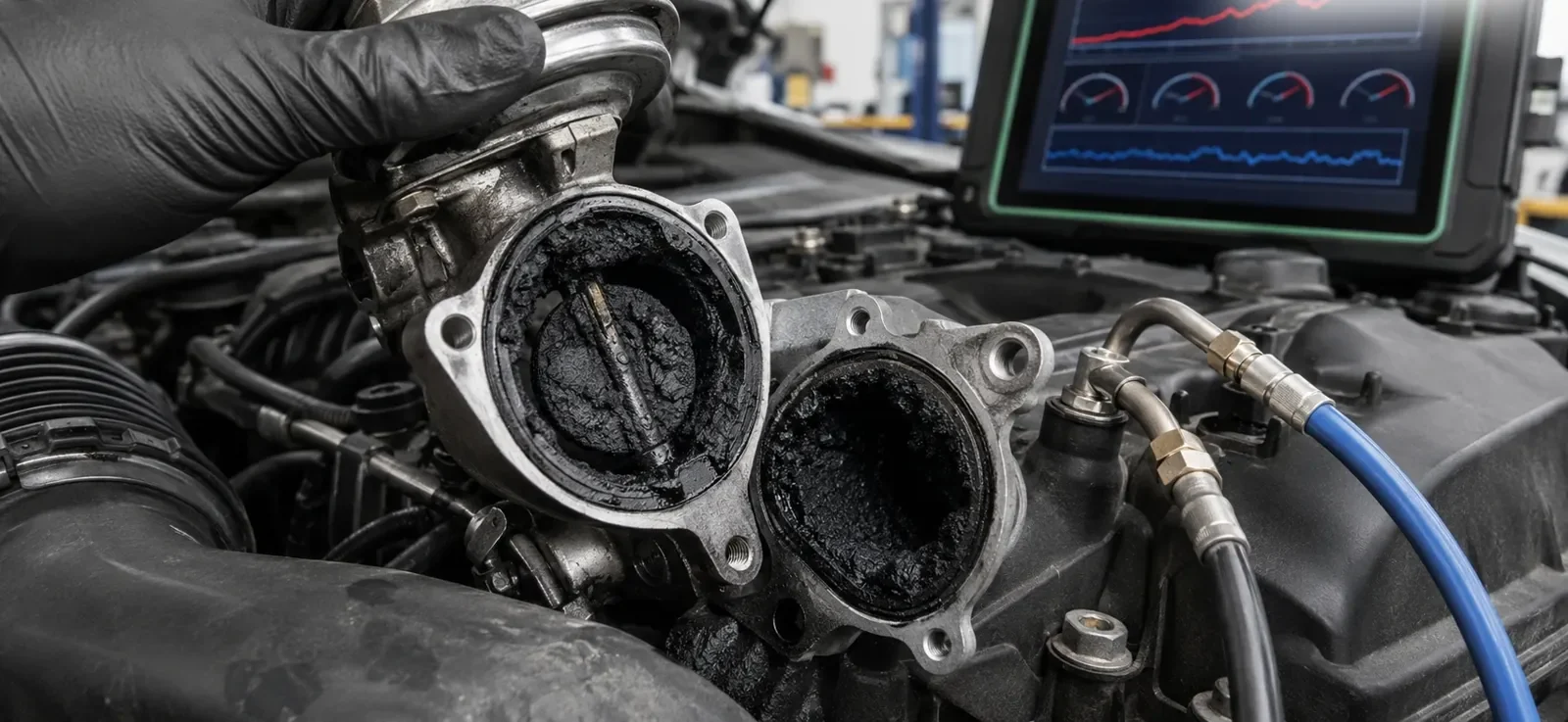
A ticking from the engine bay that is loudest from cold, an exhaust smell in the cabin, or boost and EGR faults with no obvious cause.
Cause
Owners report broken exhaust manifold studs, warped manifolds and cracked intake manifolds on high-mileage TDV8s. Heat cycling is the usual explanation.
Our fix
Leak tests, then extraction of broken studs and new gaskets, studs or manifolds. If boost has been leaking for a long time we check the turbos and EGR at the same time.
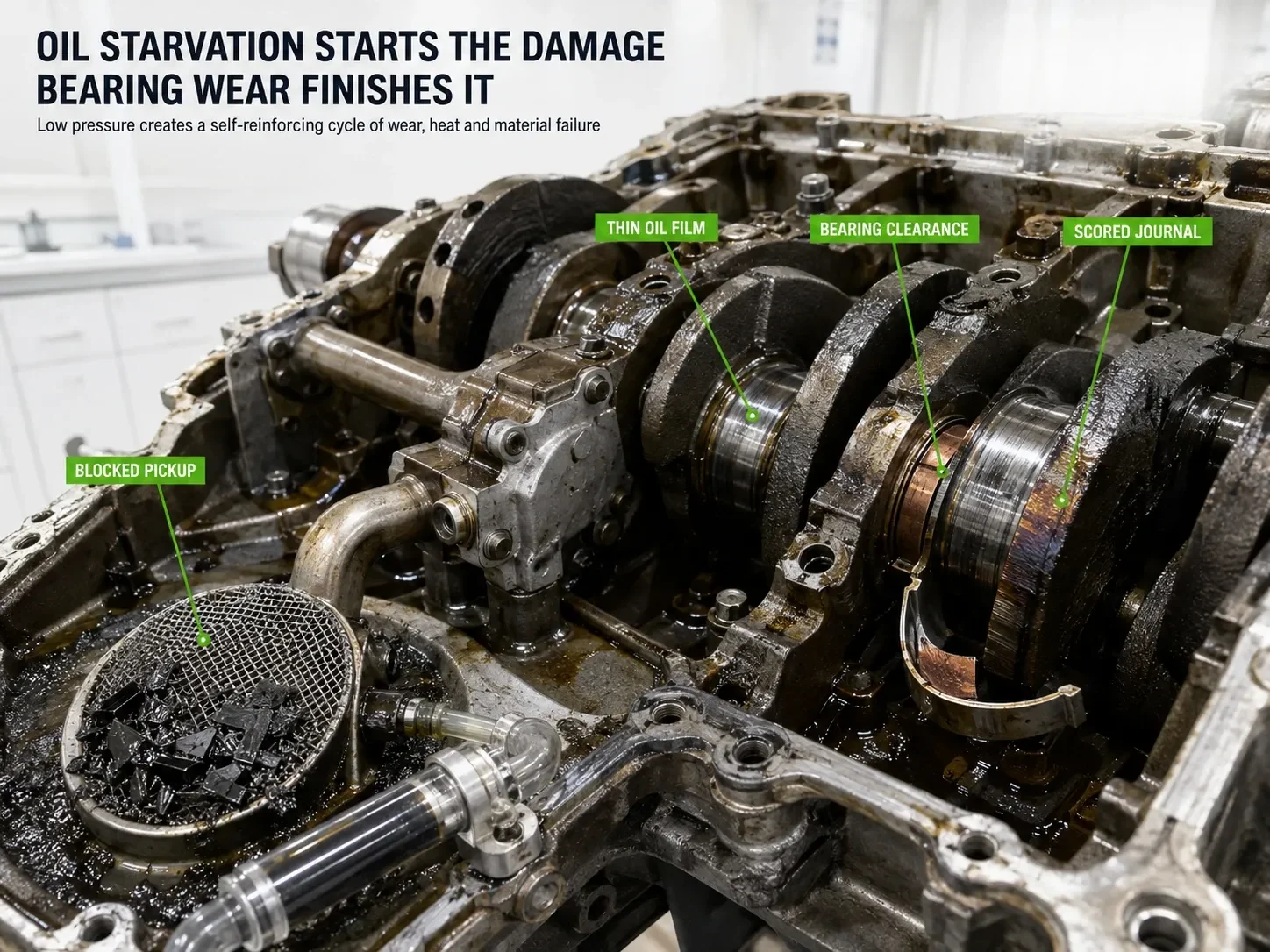
A knock that rises with revs, an oil pressure warning, or metal in the oil at a service.
Cause
Oil starvation after a turbo failure, overdue oil changes or a blocked pick-up can damage the main and big-end bearings. Specialist sites also describe crankshaft failures on the 3.6.
Our fix
Strip-down and measurement of the crank and bores. If the block and crank can be saved we rebuild; if not, a reconditioned or checked used TDV8 of the right size is fitted.
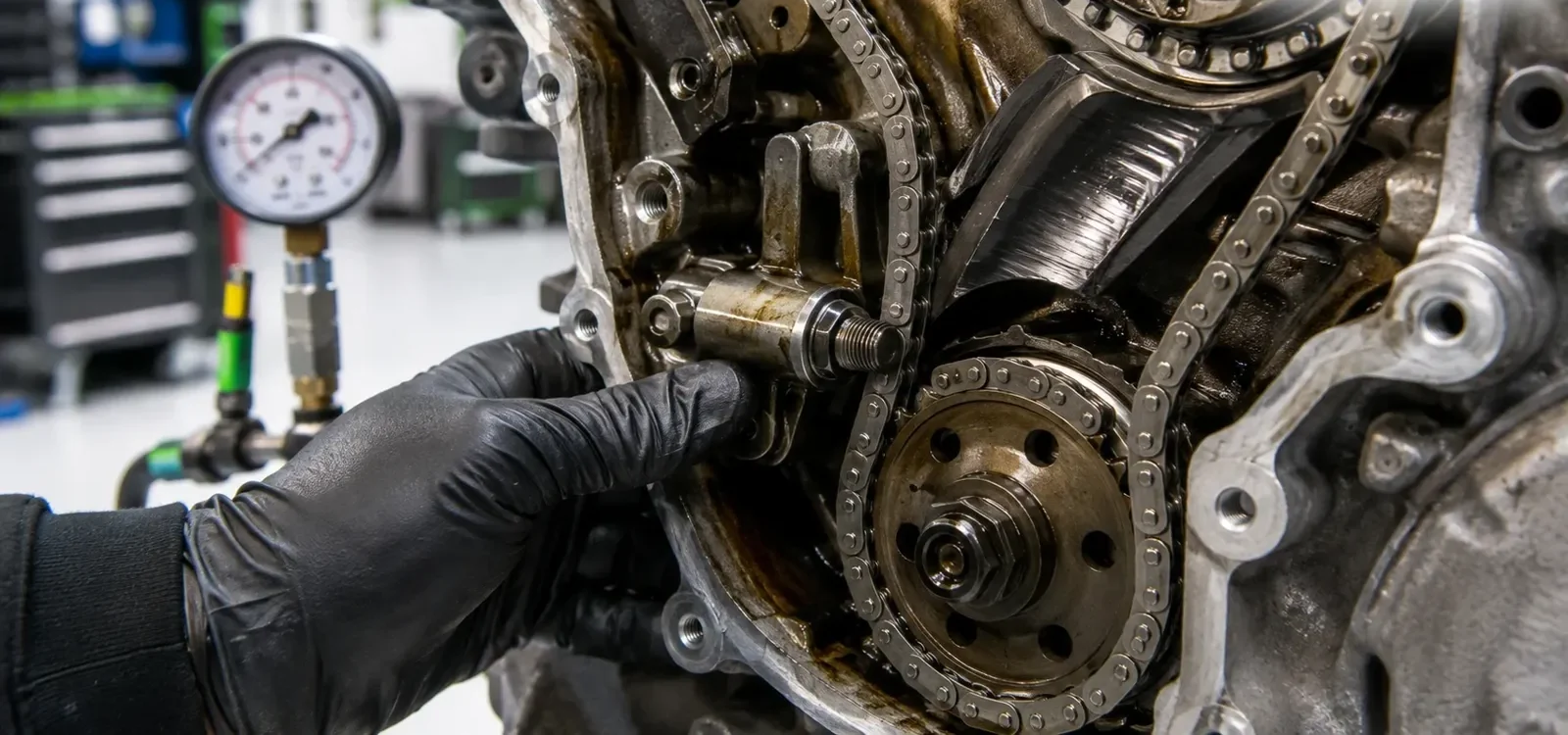
A rattle on a cold start, timing correlation codes, or rough running after a long period without oil changes.
Cause
Unlike the V6 diesels, the TDV8 drives its camshafts by chain, with no replacement interval in the schedule. Owners describe them as long-lasting; wear shows up on very high mileages or neglected oil.
Our fix
Chains, guides and tensioners replaced as a set with the timing locked using the correct tools, and the oil system cleaned so the new parts are not starved.
Coolant that goes down with no drip on the drive, white sweet-smelling exhaust smoke, or EGR codes and limp mode under load.
Cause
Each bank has EGR hardware, and coolers can crack inside or block with soot. Coolant then ends up in the intake or exhaust, and an engine that runs low on coolant soon overheats.
Our fix
Pressure and combustion-gas tests show whether it is a cooler or a head gasket. We replace the failed cooler or valve, and skim and test the heads if the engine has overheated.
When a TDV8 drops into limp mode, the turbo gets the blame. Sometimes that is right. But owners on the Range Rover Sport and L322 forums describe plenty of cases where the fault was a split hose between the turbos and intercoolers, or a vane actuator sticking, and a perfectly usable turbo was replaced.
Where a turbo really has failed, the question is why. The turbos depend on clean oil arriving under pressure. A partly blocked feed pipe, oil changed too late, or debris from earlier damage will kill a new turbo just as quickly. Shutting down straight after hard towing does not help either.
We smoke-test the intake, check actuator movement and log boost before anything is ordered. If a turbo is needed it goes on with new oil feed and return pipes. If debris has reached the oil, we look at the bearings too, because a rebuild or a reconditioned 368DT may be the safer answer. More on engine diagnosis.
Smoke and boost tests before any turbo is ordered.
Warning signs
Warning signs on a 3.6 TDV8 engine
Limp mode, especially on hills or when towing
A ticking noise from cold
Blue or grey smoke under load
Whistling that changes with throttle
An exhaust smell in the cabin
Coolant loss with no visible leak
Knocking that rises with engine speed
Oil pressure warning, even briefly
Stop driving if…
the 3.6 TDV8 engine knocks, loses oil pressure or overheats. Call 020 8089 1373.
Your options
Repair, rebuild, reconditioned or used: which is right for your 3.6 TDV8 engine?
For a 368DT the timing kit is the camshaft chain set with guides and tensioners; it is only replaced when worn or after damage. Full parts scope: engine rebuild.
Diagnosis
Boost, smoke and oil-pressure tests first.
Removal & strip-down
Turbos and manifolds removed and inspected.
Cleaning & crack testing
Block and heads crack-tested, turbo oil feeds cleared.
Machining
Crank journals measured, bores honed to size.
New parts fitted
Bearings, chains, guides and gaskets as needed.
Assembly & testing
Timing locked with V8 diesel tools.
Refit, coding & road test
Road test under load with boost logged.
From your first call to handback, see how it works.
Compatibility
Can a different engine go in a 3.6 TDV8 car?
The straightforward route is another 368DT from the same model and era, coded to the car. Range Rover and Range Rover Sport installations differ in sump, ancillaries and wiring, so we match the donor to the car, not just the badge.
Like for like: a 368DT from the same model, ideally the same model year.
3.6 to 4.4: not a straight swap. The 4.4 TDV8 has different management, turbos and an eight-speed gearbox in the L322.
To a 3.0 V6 diesel: not practical in these cars.
Used engines: worth considering at this age, with a compression and leak-down check first.
Every replacement is checked against your VIN first and coded with diagnostic equipment after fitting.
Oil & aftercare
How to protect a rebuilt 3.6 TDV8 engine
Change the oil on time with the specification in your handbook.
Let the engine idle for a minute after towing or a long motorway run.
Get limp mode diagnosed rather than cleared and ignored.
Check intercooler hoses for oil and splits at every service.
Give the car regular longer runs for the DPF.
Never drive through an oil pressure warning.
3.6 TDV8 engine rebuild cost
What affects the quote for a 3.6 TDV8 engine rebuild or replacement?
A 3.6 TDV8 engine is quoted in writing after diagnosis.
The 368DT is the 3.6-litre twin-turbo V8 diesel badged TDV8 in the Range Rover L322 and Range Rover Sport L320. JLR lists it at 3,628 cc with 271 to 272 PS and 630 to 640 Nm, depending on the model sheet.
Does the 3.6 TDV8 have a timing belt?
No. The camshafts are chain driven and there is no scheduled chain change. The V6 diesels in the same cars use belts.
What are the common 3.6 TDV8 problems?
Turbo and actuator faults, split boost hoses, broken exhaust manifold studs, cracked intake manifolds, EGR and DPF faults, and bearing damage after oil starvation.
Is a 4.4 TDV8 the same as a 3.6?
No. They share a family name but differ in capacity, turbos, management and, in the L322, the gearbox. The 4.4 replaced the 3.6 in the Range Rover for the 2011 model year.
Should I rebuild or replace a 3.6 TDV8?
If the block and crank are sound, a rebuild gives you your own engine back. If not, a reconditioned or checked used 368DT is usually better. We put both in writing.
Do you publish TDV8 rebuild prices?
No. The quote depends on the damage found and the route chosen. Send your reg for a written quote.
What warranty do I get?
You choose 6 months with unlimited miles or 12 months / 12,000 miles.